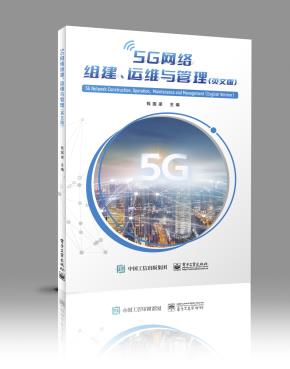
5G网络组建、运维与管理(英文版) "
本书与实际应用紧密结合,并以网络工程建设和维护的各个环节为主线,介绍了5G网络建设、维护与管理过程中需要掌握的理论知识,以及实际操作中需要具备的专业技能。本书分为4个项目:项目1介绍了5G移动网络概述;通信发展简史;5G网络架构;5G行业分工及岗位认识。项目2介绍了站点勘测;站址施工前准备;项目施工管理;单站验收。项目3介绍了设备部署与连接;参数规划;5G参数配置;小区参数配置;基站巡检与维护;基站告警巡查与协调处理。项目4介绍了无线网络优化流程;DT;CQT。
The full coverage of 5G networks in the country marks of the coming of high-speed mobile communications era. Compared to 4G networks, 5G networks deliver higher data rates, lower latency, and more capacity as the network expands. In addition, 5G networks are also different from 4G networks in terms of network architecture and key technologies. 4G changes lives, 5G changes society, and 5G will better empower thousands of industries in the future. 5G is a must-have mobile communication technology for practitioners of Mobile Communications Engineering . This textbook is developed based on the requirements of the Russian Luban Workshop. During the development process, the course standard of “5G Network Formation, Operation and Maintenance and Management” of Tianjin Electronic Information College, Huawei 5G certification system(HCIA-5G and HCIP-5G), and Huawei 5G mobile communication network deployment and operation and maintenance “1+X” certificate system are compared and analyzed, and the knowledge system of “5G Network Formation, Operation and Maintenance and Management” is reconstructed, the knowledge and skill points of each chapter are summarized, and the specific contents of the bilingual textbook resources are planned. This textbook is closely integrated with practical applications and introduces the theoretical knowledge required in the process of 5G network construction, maintenance and management, as well as the professional skills required in practical operation, with the main line of each aspect of network engineering construction and maintenance. The book is divided into five projects, project 1 includes: 5G mobile network overview; communication development history; 5G network architecture; 5G industry division of labor and job knowledge. Project 2 includes: site survey; site pre-construction preparation; project construction management; single station acceptance. Project 3 includes: equipment deployment and connection; parameter planning; 5G parameter configuration; cell parameter configuration; base station inspection and maintenance; base station alarm inspection and coordination processing. Project 4 includes: wireless network optimization process; DT; CQT. Qian Guoliang is the chief editor of the textbook; Liu Cheng, Li Su and Sui Weiyue as the associate editors; and Yuan Guimin, Zhang Liang, Zhao Junying, Liu Miao, Pang Xuelian and Xiao Xiao as the participants. Due to the limited knowledge level and experience of editors, there are inevitably omissions and shortcomings in the book, and we sincerely hope the readers can criticize and correct them.


Project 1 Understanding Mobile Network························································1 Task1 Overview of5 G Mobile Networks·..........................................................·2 1.1.1 5G Overview················································································2 1.1.2 Key Technologies of5 G·.................................................................·4 1.1.3 5G Application Scenarios ..............................................................·10 Task 2 A Brief Risto ry of Mobile Communication Developm ent .·.·.·.·.·.·.·.·.·.·.·.·.·.·.·15 121 . . First-Generat10n Mobile Commumcat10n System ····················.··············16 1.2.2 Second Generation Mobile Communication System ································16 1.2.3 Third Generation Mobile Communication System .................................·17 1 2 4 . . Fourth-Generat10n Mobile Commun1catlon System····················.············18 Task 3 5G Network Architecture .·.·.·.·.·.·.·.·.·.·.·.·.·.·.·.·.·.·.·.·.·.·.·.·.·.·.·.·.·.·.·.·.·.·19 1.3.1 Changes in 5G Network Architecture ·················································19 1.3.2 5G NetworkArchitectu re································································28 Task 4 Division of Labor and Job Aw areness in 5G In dustr y--··································31 1.4.1 5G Industry Chain········································································32 1.4.2 Job Awareness of5 G Industry ·.......................................................·.33 Project 2 Site Survey················································································35 Task 1 Site Survey ......................................................................35 2.1.1 Base Station Construction Method·····················································36 212 . . Reqmrements for Base Station Survey ················································38 2.1.3 Survey for Newly-Built Base Stations··································.··············42 2.1.4 fC Survey o o-Located Base Stat10n...................................................·44 Task 2 Prepare for Site Construct10n.·.·.·.·.·.·.·.·.·.·.·.·.·.·.·.·.·.·.·.·....·.·.·.·.·.·.·.·.·.··47 2.2.1 The Surrounding Environment of the Site Shall Meet Construction Conditions 48 2.2.2 The Equipment Room Should Meet Construction Conditions....................·49 2.2.3 Ante皿a Pole Shall Meet Construction Conditions.................................·51 2.2.4 Cable Trays Shall Meet Construction Conditions····································53 2.2.5 The Tower or Cable Tray Shall Have the Grounding Construction Conditions ·54 2.2.6 Record of Preparatory Work Before Construction····················.··············54 Task 3 Engmeering Construct10n Management····················································54 2.3.1 Identification of Hazard Sources and Countermeasures on the Engineering Site 55 2.3.2 Construction Specification for 5G Mobile Network Engineering ················.57 2.3.3 Civil Engineering Construction Specifications ······································.64 2.3.4 Construction Specifications for Equipment Installation Engineering ············.66 Task 4 Single Site Acceptance ······································································.70 2.4.1 Overview ·················································································.71 2.4.2 Engineering Acceptance ································································.72 2.4.3 Performance Acceptance ·······························································.85 Project 3 Network Maintenance ·································································.88 Task 1 Deploy and Connect Devices ·······························································.88 3.1.1 Installation Overview ···································································.89 3.1.2 Safety Matters ············································································.91 3.1.3 Preparations for Installation ····························································.92 3.1.4 Device Installation·······································································.94 3.1.5 Installation of Auxiliary Equipment ··················································.96 3.1.6 Cable Installation ········································································.98 3.1.7 Finishing Work ··········································································.102 Task 2 Parameter Planning ·········································································.103 3.2.1 Significance of Parameter Planning ··················································.103 3.2.2 Network Planning Process ····························································.107 3.2.3 Parameter Planning Principles ························································.110 Task 3 5G Parameters Setting ······································································.114 3.3.1 Preparations ·············································································.115 3.3.2 Setting Global Parameters ·····························································.116 3.3.3 Setting Device Parameters ····························································.117 3.3.4 Setting Transmission Parameters ·····················································.118 Task 4 Cell Parameter Configuration ·····························································.119 3.4.1 5G Cell Parameter Configuration ····················································.120 3.4.2 4G Relevant Parameters ·······························································.121 Task 5 Base Station Inspection and Maintenance ···············································.122 3.5.1 Concept and Significance of Base Station Inspection ·····························.122 3.5.2 Work Content of Base Station Inspection ···········································.123 3.5.3 Maintenance of the Base Station ·····················································.128 Task 6 Base Station Alarm Inspection and Coordination Processing ·························.131 3.6.1 Classification of Common Base Station Faults·····································.132 3.6.2 Analyze and Process the Base Station Alarm Information ·······················.144 3.6.3 Troubleshooting Methods ·····························································.148 Project 4 Wireless Network Optimization ····················································.152 Task 1 Wireless Network Optimization Process ·················································.153 4.1.1 The Significance of 5G Network Optimization ····································.154 4.1.2 5G Network Optimization Process ···················································.157 Task 2 DT ·····························································································.159 4.2.1 The Definition of DT···································································.159 4.2.2 DT Parameters ··········································································.161 4.2.3 DT Case ··················································································.165 Task 3 CQT ···························································································.167 4.3.1 The Definition of CQT·································································.167 4.3.2 CQT Software Connection ····························································.168 4.3.3 CQT Indicators ··········································································.170