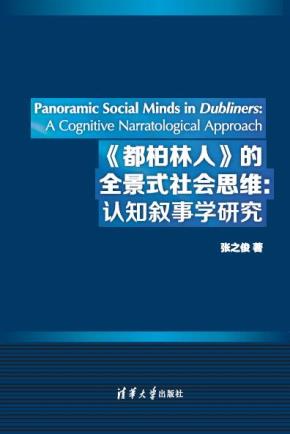
《都柏林人》的全景式社会思维"
本书运用认知叙事学领域中的社会思维理论,探讨《都柏林人》小说集中的人物思维互动。本书首先探讨了开篇《姊妹们》,认为其显露出小说集的社会思维状况;其次,本书确立了显性与隐性社会思维;最后分析了末篇《死者》,指出其为小说集的社会思维起到了收尾作用。本书聚焦思维互动,通过文本细致分析,充分展现了都柏林人群体瘫痪精神,深入挖掘了瘫痪这一主题的根源,展现了全景式社会思维。
本书适合对语言、文学与认知界面研究感兴趣的研究生与科研人员阅读,也适合热
衷于《都柏林人》的读者阅读。
Dubliners (1914) is a renowned collection of fifteen short stories by the Irish writer James Joyce, centering on the spiritual paralysis of the IrishCatholic middle class citizens at the turn of the twentieth century. It is hailed as one of the best short story collections in the English language. However,eclipsed by Joyce’s later works, Dubliners did not receive enough attention nor adequate recognition among the early critics. From the 1940s, it began to attract the Joycean critics’ attention and came to prominence when American critics rediscovered its value in the 1950s. From the 1970s on, Dubliners criticisms began to come into blossom with multiple perspectives taken on not only single stories but also the collection, and reap fruits distilled in monographs, chapters in edited books, scholarly journals, websites and translations, contributing to the “Joyce Industry”. At the same time, Dubliners also witnessed and echoed the rise of different literary theories as they tried their hands at interpretations of it. The charm of the stories in the collection also lies in their power to test theories ranging from structuralism to aestheticism. Nowadays, Dubliners becomes more and more popular so much so that it is widely used as textbook and anthology in varieties of courses for both English as native language and English as foreign language. Therefore Dubliners is as distinguished as Joyce’s later works, and an in-depth study on it will set the tone and weave the fabric for Joyce’s oeuvre.
As Joyce revealed in his letter with a publisher, Dubliners serves as an ethical mirror for his people, recording a chapter of the Irish moral history.Against the backdrop of the Irish colonial state in both politics and religion.Joyce imputes the paralysis of his people to themselves. In addition, as the title suggests, Dubliners is concerned with the Dublin people as a group, who betray a collective spiritual paralysis. Among the previous studies on Dubliners, an undue attention predominantly revolves around either individual characters via text-driven approach or such social backgrounds as Irish history, religion,and politics via context-based approach. As a result, no study has been devoted to a group perspective on their collective paralysis in Dubliners. As an area of cognitive narratology, the social mind theory proposed by the British scholar Alan Palmer echoes this group perspective, by which he cleaves to the social nature of mind, arguing that tracing the interaction of characters’ minds, i.e.the social minds, is central for the readers to understand a fiction. A further examination of the Dubliners studies reveals that no attention has been given to the interactive minds. Therefore, it is very essential to initiate a group perspective on the social minds in Dubliners. Against this background, this book will launch a cognitive narratological approach reified by an extended version of the social mind theory to plumb the interactions of the characters’ minds in all fifteen short stories in Dubliners and explore how the social minds are presented, ultimately commanding the panoramic social minds of the collection. It will show that tracing the social minds in Dubliners will be central to our understanding of this collection.
Upon a general introduction, a systematic review of previous studies and a holistic view of theoretical description, this book sets out its analytical framework. In turn, it zeroes in on its detailed analysis. It firstly discusses the social minds in the initial story “The Sisters”, establishing its role as an exposure for the panoramic social minds in the collection. Secondly, two layers of the social minds in Dubliners are identified: the overt social minds and the covert social minds. The former is concerned with the social minds in the individual stories while the latter is with the social minds across the stories.Three stories are explored in terms of the overt social minds: tacit complicity in“The Boarding House”, open complicity in “Grace” and political anosognosia in“Ivy Day in the Committee Room”. On the other hand, the covert social minds revolve around group servility, group self-unknowing and group isolation in all the fifteen short stories. Finally, the social minds in the last story “The Dead”are examined to serve as a closure for the panoramic social minds in Dubliners.
The findings of the book are as follows:
First, Dubliners is found to pit individuals against groups, painting pictures of tacit and open complicity of groups against individuals. Second, the collection also paints a picture of groups’ utter ignorance of both others and themselves. fird, the social nature of mind is also fleshed out by an individual’s misattribution of states of minds to others, an individual’s manipulation of social minds in her mind and an individual’s intramental thought where an interior dialogue looms between this individual character and other character(s).All these overt social minds reveal an exceedingly disharmonious human relationship in Dubliners. The individual stories in this book boast various techniques for presenting the overt social minds: overt thought report, covert thought report, free indirect thought, and behaviorist narration. Joyce not only deploys direct reference to mind, but also favors in using behaviorist narration to present the overt social minds in Dubliners. Thus, Joyce utilizes both direct and indirect techniques for presenting the overt social minds to uncover intermental thought or communal thought and nested mental states, exposing the Dubliners’ collective paralytic minds in their social, religious and political life. It is also found that Joyce infuses free indirect thought with an interior dialogue between characters, thereby unrolling the public and social nature of the social minds.
In the process of reading the interactions of the characters’ minds across the stories, the generic readers can adopt the three specific mediums, namely thematic echo, compatible narrative technique and style of repetition, to generate the covert social minds as fleshed out by the characters’ intratextual intermental mind. The thematic echo is an essential prerequisite while the other two mediums are catalysts. Specifically, the readers in the process of reading are fundamentally primed by the thematic echo shared between or among the stories, and sometimes catalyzed by the compatible narrative technique such as compatible narrative voice and compatible narrative style or the style of repetition such as lexical repetition and semantic repetition across the stories to generate the characters’ intratextual intermental minds with regard to group servility, group self-unknowing and group isolation.In this regard, it is found that the Dubliners betray their group servility to the colonialism and the Church, and the females’ servility to the patriarchy.In the face of this servile plight, the Dubliners display their group selfunknowing: despite their awareness of the dilemma, some characters refuse to think consciously or indulge in their wishful thinking, thus being relegated to their group self-deception; lamentably, other characters are unaware of their problems, suffering from their group anosognosia. Although there are characters with hyper-consciousness, they fall victim to their own self-division,thus falling into their group isolation.
The contributions of this book fall into four facets:
First, it provides a new perspective to explore Dubliners, a collection of short stories, using the social mind theory. This new perspective diagnoses the Dubliners’ mental paralysis through an excruciatingly detailed study on the social minds of the collection.
Second, it enriches the social mind theory by proposing “covert thought report”and “latent double cognitive narrative”, and expanding Palmer’s “double cognitive narrative” to “nested mental states” in Dubliners. Equally important, it offers a new look at free indirect thought reinvigorated by Joyce in the sense of an interior dialogue between characters, rendering the social minds in a new light.
Third, it extends the scope of the social mind theory by incorporating into it the covert social minds. In turn, the term “intratextual intermental mind”is proposed to represent the covert social minds. Based on Michael Burke’s three text-driven main mediums in the reading stage, this book identifies three specific mediums and their reifications.
Finally, as an area of cognitive narratology, the social mind theory offers a group perspective by helping zoom in on the interactions of the characters’ minds in Dubliners. It captures the subtlety of the socially-based cognitive processes in reading Dubliners. Therefore, this book contributes to cognitive narratology as well.
Zhang Zhijun
March, 2021


Chapter 1 Introduction .......................................................................... 1
Chapter 2 Previous Research on Dubliners and
Fictional Social Minds ........................................................ 10
2.1 General Criticisms on Dubliners ..............................................................10
2.1.1 The Early Period ...................................................................................10
2.1.2 The Transitional Period .......................................................................12
2.1.3 The Later Period ...................................................................................15
2.2 Research on Minds in Dubliners ...............................................................26
2.2.1 The Textual Approach ..........................................................................27
2.2.2 The Contextual Approach ...................................................................29
2.3 Narratological Approaches to Fictional Minds ......................................30
2.3.1 The Traditional Narratological Approach .........................................30
2.3.2 The Cognitive Narratological Approach ...........................................33
2.4 Research on Social Minds in Fictions ......................................................36
Chapter 3 Social Mind Theory and Analytical Framework ................ 39
3.1 The Social Nature of Mind ........................................................................39
3.2 The Social Mind Theory ............................................................................41
3.2.1 Palmer’s Response to Classical Methodologies ................................41
3.2.2 The Centrality of Mind ........................................................................45
3.2.3 The Social Mind in Action ..................................................................48
3.3 Introducing the Social Mind Theory into Dubliners .............................59
3.3.1 Applicability of the Social Mind Theory in Dubliners .....................59
3.3.2 Improvement on the Social Mind Theory for Dubliners .................60
3.4 An Analytical Framework .........................................................................66
Chapter 4 The Social Minds in “The Sisters”: An Exposure ................ 68
4.1 The Opening: The Boy’s Publicly Engaged Mind ...................................70
4.2 The Boy’s Relationship with the Secular Adults .....................................72
4.2.1 Unreadability of the Male Adults’ Mind ............................................72
4.2.2 The Boy’s Dramaturgical Action.........................................................75
4.2.3 Unreadability of the Female Adults’ Mind ........................................77
4.2.4 The Boy’s “Disappearance” ..................................................................80
4.2.5 Inescapability from the Secular World ..............................................81
4.3 The Boy’s Relationship with Father Flynn ...............................................83
4.3.1 Attributional Diffculty ........................................................................83
4.3.2 Inescapability from the Religious World ...........................................86
4.4 Interpretative Uncertainty .........................................................................88
4.5 Summary .....................................................................................................89
Chapter 5 The Overt Social Minds ....................................................... 90
5.1 Tacit Complicity in “The Boarding House” ............................................90
5.1.1 Communal Thought on Mrs. Mooney, Jack and Polly ....................92
5.1.2 Intermental Thought: Tacit Complicity between Mother and Daughter ........................................................................................94
5.1.3 Ideology: Tacit Complicity among Ideological Forces ..................100
5.2 Open Complicity in “Grace” ...................................................................108
5.2.1 Foregrounded Communal Perception and _ ought .....................111
5.2.2 Intermental Thought: Open Complicity .........................................115
5.2.3 Ideology: Open Complicity between the Church and the Mammon ..............................................................................132
5.3 Political Anosognosia in “Ivy Day in the Committee Room”.............138
5.3.1 The Opening: “Allegory of the Cave” ...............................................141
5.3.2 Hynes’ Debut: Failed Enlightenment ...............................................145
5.3.3 No Alcohol Served: Unmasking the Political Anosognosia .........149
5.3.4 Alcohol Served: Fortifying the Political Anosognosia ..................162
5.4 Summary ...................................................................................................173
Chapter 6 The Covert Social Minds ................................................... 175
6.1 Group Servility ..........................................................................................177
6.1.1 Group Servility to the Colonialism ..................................................177
6.1.2 Group Servility to the Church ..........................................................185
6.1.3 Females’ Group Servility to the Patriarchy .....................................188
6.2 Group Self-Unknowing ...........................................................................198
6.2.1 Group Self-Deception ........................................................................199
6.2.2 Group Anosognosia ...........................................................................207
6.3 Group Isolation .........................................................................................217
6.3.1 Individuals against Crowds ...............................................................217
6.3.2 Group Self-Division ...........................................................................220
6.4 Summary ...................................................................................................233
Chapter 7 The Social Minds in “The Dead”: A Closure ..................... 235
7.1 The Dublin Bourgeois Communal Thought .........................................239
7.1.1 Communal Thought: Bourgeois Pretentiousness ..........................240
7.1.2 Communal Thought: Bourgeois Hypocrisy ...................................241
7.2 Gabriel’s Encounters with Three Females ..............................................245
7.2.1 Gabriel’s Encounter with Lily ............................................................245
7.2.2 Gabriel’s Encounter with Miss Ivors ................................................251
7.2.3 Gabriel’s Encounter with Gretta .......................................................260
7.3 The Ending: Gabriel’s Epiphany ..............................................................275
7.4 Summary ...................................................................................................281
Chapter 8 Conclusion ......................................................................... 284
Bibliography .......................................................................................... 293
Appendix A Synopses of the Fifteen Stories in Dubliners ................. 311
Appendix B Composition Time of the Dubliners Stories .................. 317
本书首先探讨了开篇《姊妹们》,认为其显露出小说集的社会思维状况;确立了显性与隐性社会思维;最后分析了末篇《死者》,指出其为小说集的社会思维起到了收尾作用。本书适合对语言、文学与认知界面研究感兴趣的研究生与科研人员阅读,也适合热衷于《都柏林人》的读者阅读。
张之俊,清华大学外国语言文学博士,现为中国地质大学(北京)外国语学院教师,主要研究领域为认知叙事学与乔伊斯作品研究,发表本领域CSSCI来源期刊研究论文,主持与参与各级项目十余项。两次获得国家留学基金委资助分别在美国和英国高校做访问学者。曾获得2010年北京市高等教育学会研究生英语教学研究分会第二届青年教师基本功比赛特等奖,2018年 第九届“外教社杯”全国高校外语教学大赛(英语类专业组)北京赛区英语专业组一等奖。