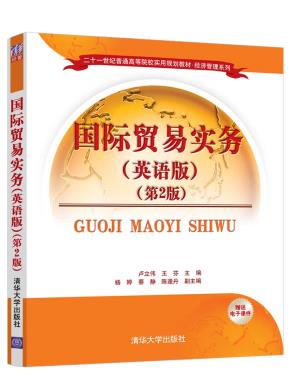
国际贸易实务(英语版)(第2版)"
《国际贸易实务(英语版)(第2版)》以国际贸易流程为基础框架,介绍了国际贸易术语、商品描述、货物运输、货物运输保险、商品价格、支付工具、支付方式、索赔与不可抗力、谈判与磋商、进出口合同的履行以及国际贸易方式等国际贸易实务中的主要内容,配以相关的案例、流程图、合同条款、法律条文和惯例,结构完整,内容全面,具有较强的实践性和可操作性。
《国际贸易实务(英语版)(第2版)》既适合高等院校商务英语、国际贸易等涉外专业的本、专科教学,也可供从事外经贸工作的人士及对外贸感兴趣的读者参考学习。
再 版 前 言
国际贸易实务是我国普通高等院校涉外经济专业的一门专业基础课程。随着我国经济的快速发展以及全球经济一体化进程的加速,社会亟须兼备专业知识和英语能力的复合型人才。针对这种变化,我国高等院校的教学与时俱进,学科体系、教学措施和教学手段不断完善和创新。2007年,教育部正式批准成立商务英语专业,用英语教授商务专业课程成为一种必然的趋势。随着改革开放进程的加快,我国对外贸易的限制不断取消,并逐步与国际接轨。由于我国的外贸实务操作有其自身的特色,如一些特定的环节、行业规范和法律法规等,因此,该课程的教学不能完全依赖于外文原版教材,需要编写适合本土教学需要的英文版国际贸易实务教材。本书正是为了适应这一需要而编写的。
本书以国际贸易流程为基础框架,包含绪论、国际贸易术语、商品描述、货物运输、货物运输保险、商品价格、支付工具、支付方式、索赔和不可抗力、谈判与磋商、进出口合同的履行以及国际贸易方式等内容。本书强调学以致用,具有较强的实践性、实用性和可操作性,适合各高校商务英语、国际贸易等涉外专业的本、专科教学以及对外贸感兴趣的读者自学。本书具有如下特点。
(1) 全面性及系统性。本书系统地介绍了进出口贸易的整个流程,结构完整,内容全面,语言浅显易懂。
(2) 新颖性和翔实性。教材融入了国际贸易领域的最新发展与变化,如反映了INCOTERMS 2010在国际贸易术语解释方面的新内容,以及2012年财政部、国家税务总局联合下发通知调整的相关出口退(免)税政策。自2012年8月1日起,取消出口收汇核销单,出口退税由原来的两单两票调整为一单两票,这在第11章中也及时加以增补。
(3) 提供开篇案例或新闻导读。教材的每一章都以一个引人入胜的案例或财经新闻开篇,从而提高读者的阅读兴趣,提升学习效果。
(4) 引导对疑难问题的思考。本书将每章的重点、难点、热点问题加以梳理并展开阐述,并配上相应的中文批注,使每章重点突出、内容层次清晰,以提高读者的学习效率,同时解决课时不足或自学困难等问题。
(5) 实践性和可操作性强。本书在各章节适当位置配上相关的案例、流程图、合同条款以及法律条文和惯例,同时,在每章节的末尾配上相应的练习,以增强本书的实践性和可操作性。
随着国际形势的变化,国际贸易的相关内容、惯例以及方式也发生了变化。因此,本书相关章节的内容也作了相应的调整和增补,并出版了第2版。相较于2014年的第1版,第2版更新了有关章节的导入案例和课后练习。另外,第2章的国际贸易术语作了很大的调整,摒弃了INCOTERMS 2000通则的相关内容,以INCOTERMS 2010通则的内容为主;第4章的海洋运输突出了集装箱运输以及海运提单的内容,并增补了船东单和货代单的内容;由于近年来进口日趋强劲,所以第6章的报价增补了进口报价的内容;第10章完善了相关的合同条款的内容;第11章增补和完善了相应的单据;近年来跨境电商发展迅猛,所以第12章增补了跨境电商的内容。
参加本书编写的有卢立伟(第1章、第7章、第8章、第9章)、王芬(第4章、第6章)、杨婷(第2章、第5章)、蔡静(第10章、第12章)、陈逢丹(第3章、第11章)等。本书由卢立伟和王芬任主编,杨婷、蔡静、陈逢丹任副主编。
在本书编写过程中,编委们参阅了近年来国内外相关学者的研究成果,参考文献仅反映了其中的主要部分,恕不能一一答谢。本书是集体成员努力的成果,受编者学识所限,难免有不足之处,希望广大读者和同行多多批评指正。
编 者


目 录
Chapter 1 General Introduction to
International Trade 1
1.1 What Is International Trade 3
1.2 The Importance of International Trade 3
1.2.1 International Trade Restrictions 4
1.2.2 Differences between International
Trade and Domestic Trade 4
1.3 World Trade Organization 5
1.3.1 Overview 5
1.3.2 Functions of WTO 6
1.3.3 Basic Principles 6
1.3.4 Missions 6
1.3.5 Formal Structure 7
1.4 Main Procedures of International Trade 9
1.4.1 Basic Procedures of Export 9
1.4.2 Basic Procedures of Import 12
1.5 Relevant International Practice and
? Laws 13
1.6 Overview of Contract 15
1.6.1 The Functions of a Written
Contract 15
1.6.2 The Essential Features of a Legally
Binding Contract 16
1.6.3 The General Contents of a Sales
Contract 16
1.7 Overview of This Book 18
【Key Terms and Words】 20
【Exercises】 20
Chapter 2 International Trade Terms 22
2.1 Introduction to trade terms 24
2.1.1 Warsaw-Oxford Rules 1932 24
2.1.2 Revised American Foreign Trade
Definitions 1941 26
2.1.3 International Commercial
Terms 29
2.2 Introduction to INCOTERMS 2010 29
2.2.1 Mode of transport 30
2.2.2 The six most popular trade
terms 31
2.2.3 The other five trade terms 45
2.3 INCOTERMS 2010 vs. INCOTERMS
? 2000 53
2.4 Incoterms and Contract 57
2.5 Choice of Trade Terms 58
【Key Terms and Words】 60
【Exercises】 61
Chapter 3 Terms of Commodity 65
3.1 Name of Commodity 67
3.1.1 Commodity Naming Methods 67
3.1.2 HS Code 68
3.1.3 Name Clauses in the Contract 68
3.2 Quality of Commodity 69
3.2.1 Quality Stipulation Methods 70
3.2.2 Quality Latitude and Quality
Tolerance 76
3.2.3 Quality Clauses in the Contract 77
3.3 Quantity of Commodity 77
3.3.1 Unit of Measurement 78
3.3.2 Calculation of Weight 80
3.3.3 Quantity Allowance Clauses 82
3.3.4 Quantity Clauses in the
Contract 83
3.4 Packing of Commodity 84
3.4.1 Transport Packing 85
3.4.2 Sales Packing 91
3.4.3 Neutral Packing and Designated
Brand 93
3.4.4 Packing Clauses in the Contract 94
【Key Terms and Words】 96
【Exercises】 97
Chapter 4 International Cargo
Transport 101
4.1 Containerization 103
4.1.1 Features of Container
Transportation 103
4.1.2 Types of Container 104
4.1.3 Freight of Container
Transportation 105
4.2 Modes of Transportation 107
4.2.1 Marine Transport 108
4.2.2 Air Transportation 121
4.2.3 Railway Transportation 122
4.2.4 International Multi-modal
Transport 122
4.2.5 Land Bridge Transport 123
4.2.6 Postal Transport 123
4.2.7 Pipelines Transport 123
4.3 Shipment Clauses in Sales Contract 124
4.3.1 Time of Shipment and Time of
Delivery 124
4.3.2 Port of Shipment and Port of
Destination 125
4.3.3 Shipping Advice 126
4.3.4 Partial Shipment and
Transshipment 126
4.3.5 Lay Time, Demurrage and
Dispatch 127
【Key Terms and Words】 129
【Exercises】 129
Chapter 5 International Cargo Transport
Insurance 133
5.1 Principles of Cargo Insurance 136
5.1.1 Principle of Insurable Interest 136
5.1.2 Principle of Utmost Good
Faith 136
5.1.3 Principle of Indemnity 137
5.1.4 Principle of Proximate Cause 138
5.2 The Definition of Insurance 138
5.3 Parties to the Insurance 139
5.3.1 Insurer 139
5.3.2 Insured 140
5.3.3 Brokers 140
5.4 Marine Insurance 140
5.4.1 Risks 141
5.4.2 Losses 141
5.4.3 Expenses 143
5.5 Coverage of Marine Cargo Insurance
? of CIC 144
5.5.1 Basic Coverage 145
5.5.2 Additional Risks 146
5.6 Coverage of Marine Cargo Insurance
? of ICC 150
5.6.1 Institute Cargo Clauses A 150
5.6.2 Institute Cargo Clauses B 151
5.6.3 Institute Cargo Clauses C 151
5.6.4 Major Exclusion 153
5.7 Procedures of Marine Insurance 153
5.7.1 Gather Information 153
5.7.2 Choose the Insurance
Coverage 154
5.7.3 Get Quotes 154
5.7.4 Pay the Insurance Premium 154
5.7.5 Purchase the Insurance Policy 155
5.7.6 Lodge an Insurance Claim 156
5.8 Insurance Clauses in Sales Contract 157
【Key Terms and Words】 159
【Exercises】 160
Chapter 6 Price of Goods 163
6.1 Price Elements 165
6.1.1 Pricing Principles 165
6.1.2 Pricing Consideration 166
6.1.3 Pricing Methods 167
6.1.4 Pricing Composition 170
6.1.5 Currency Option 172
6.2 Calculation of Price 173
6.3 Export Cost Accounting 175
6.4 Commission and Discount 177
6.4.1 Price Including Commission 177
6.4.2 Price with Discount 178
6.5 Import Cost Accounting 178
6.5.1 Import contract price 179
6.5.2 Total Domestic Expenses of
Importing Countries 179
6.5.3 Calculation of Imported Goods
Tariff 179
6.5.4 Calculation of Value-added Tax and
Consumption Tax 180
6.5.5 Total Import Cost 181
6.6 Price Clause in Sales Contract 181
【Key Terms and Words】 182
【Exercises】 182
Chapter 7 Credit Instruments 184
7.1 Summary of Instruments 186
7.1.1 Definition of Instruments 186
7.1.2 Essential Features of
Negotiable Instruments 186
7.1.3 Functions of Negotiable
Instruments 187
7.1.4 The Legal System of
Instruments 188
7.2 Bill of Exchange (Draft, Bill) 190
7.2.1 Definition of Bill of
Exchange 190
7.2.2 Contents of a Bill of
Exchange 191
7.2.3 The Acts of Bills of
Exchange 195
7.2.4 The Classification of the
Drawer 199
7.2.5 The Order of Making
Recourse 200
7.3 Promissory Note 201
7.3.1 The Definition from Bills of
Exchange Act 1882 of the United
Kingdom 201
7.3.2 The Definition from the Negotiable
Instruments Law of the People’s
Republic of China 201
7.3.3 The Key Elements in the
Promissory Note 202
7.3.4 Classification of Promissory
Notes 202
7.3.5 Differences Between a Promissory
Note and a Bill of Exchange 203
7.4 Check (Cheque) 204
7.4.1 Definition of Check 204
7.4.2 Classification of Check 205
7.4.3 Differences Between a Check and
a Bill of Exchange 205
【Key Terms and Words】 206
【Exercises】 206
Chapter 8 International Payment and
Settlement 210
8.1 Remittance 212
8.1.1 The Definition of Remittance 212
8.1.2 Parties to an Remittance 212
8.1.3 The Classification of Remittance 213
8.1.4 Reimbursement of Remittance
Cover 216
8.1.5 Cancel the Remittance or Refund
the Imbursement 217
8.1.6 The Application of Remittance
in International trade 218
8.2 Collection 220
8.2.1 Definition of Collection 221
8.2.2 Nature of Collection 221
8.2.3 Procedure of Documentary
Collection 221
8.2.4 The Involved Parties in
Collection 222
8.2.5 Types of Collection 222
8.2.6 The Property, Advantages
and Disadvantages 225
8.2.7 The Rules of Uniform Rules
for Collections 522 (URC522) 225
8.2.8 Points for Attention for
Collection 226
8.2.9 Risk and Protection for Exporters
and Importers 226
8.2.10 Financing under the
Collection 227
8.3 Letter of Credit 229
8.3.1 Definition of L/C 229
8.3.2 Parties to a Letter of Credit 230
8.3.3 Procedure of Credit L/C 232
8.3.4 Characteristics of a Letter of
Credit 240
8.3.5 The Use of a Letter of Credit 241
8.3.6 Contents of a Letter of Credit 241
8.3.7 The Varieties of Documentary
Credit 242
8.3.8 Other Special Credits 246
8.3.9 Combined Use of Different
Methods of Payment 250
【Key Terms and Words】 252
【Exercises】 253
Chapter 9 Inspection, Claims, Force
Majeure and Arbitration 264
9.1 Inspection 266
9.1.1 The Implication of
Commodity Inspection 267
9.1.2 The Importance of
Commodity Inspection 267
9.1.3 Import and Export
Commodity Inspection 268
9.1.4 Time and Place of Inspection 268
9.1.5 Inspection Standard 270
9.1.6 Inspection Certificate 271
9.1.7 Inspection Clause 272
9.1.8 Inspection Procedures 272
9.2 Claim 273
9.2.1 Breach of Contract 275
9.2.2 Liabilities of Breach of
Contract 275
9.2.3 Valid Term for Claim 276
9.3 Force Majeure 277
9.3.1 Definition of Force Majeure 277
9.3.2 Features of Force Majeure 277
9.3.3 Consequences of Force
Majeure 278
9.3.4 Force Majeure Clause 278
9.4 Arbitration 280
9.4.1 The Definition of Arbitration 280
9.4.2 Characteristics of Arbitration 281
9.4.3 Arbitration Clauses 281
【Key Terms and Words】 284
【Exercise】 284
Chapter 10 Business Negotiation and
Establishment of
Contract 287
10.1 The General Process of Business
Negotiation 289
10.2 Enquiry 291
10.2.1 Types of Enquiry 291
10.2.2 Guidelines for Writing Enquiries
and Replies 292
10.3 Offer 293
10.3.1 The Meaning of an Offer 293
10.3.2 Types of an Offer 293
10.3.3 Four Necessary Conditions of
a Firm Offer 295
10.3.4 Time of Validity or Duration of an Offer 297
10.3.5 Withdrawal or Revocation of
an Offer 298
10.3.6 Termination of an Offer 299
10.4 Counter-offer 299
10.5 Acceptance 300
10.5.1 The Meaning of Acceptance 301
10.5.2 Effective Time of
Acceptance 301
10.5.3 Late Acceptance 301
10.5.4 Withdrawal of Acceptance 302
10.6 Conclusion of Contract 303
10.6.1 Necessary Conditions of
an Effective Contract 303
10.6.2 Forms of a Written Contract 303
10.6.3 Structure of a Written
Contract 304
【Words and phrases】 310
【Exercises】 310
Chapter 11 Exporting and Importing
Procedures 314
11.1 Exporting Procedures 316
11.1.1 Preparation Stage of Export
Contract 317
11.1.2 Negotiation stage of export
contract 319
11.1.3 Performance stage of export
contract 321
11.2 Importing procedures 345
11.2.1 Preparation stage of import
contract 346
11.2.2 Negotiation stage of import
contract 348
11.2.3 Performance stage of import
contract 349
【Key Terms and Words】 355
【Exercises】 356
Chapter 12 Modes of International
Trade 358
12.1 Agency and Distribution 360
12.1.1 Agency 360
12.1.2 Distribution 361
12.2 Consignment 362
12.2.1 Definition 362
12.2.2 Features 362
12.2.3 The Advantages and Disadvantages
of Consignment 363
12.3 Tenders and Auction 364
12.3.1 Tenders 364
12.3.2 Auction 365
12.4 Counter Trade 366
12.4.1 Main Reasons Why Counter Trade
Is Employed 367
12.4.2 Specific Forms of Counter
Trade 367
12.5 Futures Trading 370
12.5.1 Introduction to Futures
Trading 370
12.5.2 Main Types of Futures
Traders 371
12.5.3 Danger of Futures Trading 372
12.6 E-commerce 373
12.6.1 Definition of E-commerce 373
12.6.2 Types of E-commerce 374
12.6.3 Benefits of E-commerce 376
12.6.4 Limitations of E-commerce 377
12.6.5 Tips for Running a Successful
E-commerce Business 378
12.6.6 The Future of E-commerce 379
12.7 Cross-border E-commerce 379
【Key Terms and Words】 382
【Exercises】 382
References 383
《国际贸易实务(英语版)(第2版)》提供开篇案例或新闻导读。并在各章节适当位置配上相关的案例、流程图、合同条款以及法律条文和惯例,同时,在每章节的末尾配上相应的练习,以增强本书的实践性和可操作性。
《国际贸易实务(英语版)(第2版)》提供开篇案例或新闻导读。并在各章节适当位置配上相关的案例、流程图、合同条款以及法律条文和惯例,同时,在每章节的末尾配上相应的练习,以增强本书的实践性和可操作性。