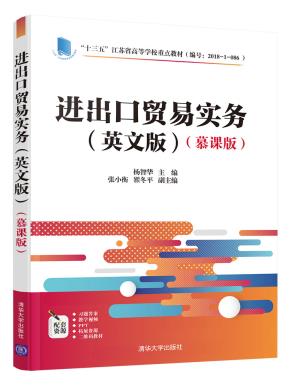
进出口贸易实务(英文版)(慕课版)"
《进出口贸易实务:慕课版:英文》结合我国进出口贸易的具体实践,秉承培养进出口经理人的目标,以货物进出口贸易中的习惯做法、贸易惯例和法律为依据,详细介绍了国际货物买卖合同的订立和履行、国际货物买卖的标的物、进出口商品的定价和汇率风险、国际货物运输与保险、国际结算以及进出口贸易争端与解决机制问题。
为尽可能地贴近进出口贸易实际并满足国际化人才培养需求,《进出口贸易实务:慕课版:英文》采用全英文编写,引导读者从总体上把握进出口业务流程、深入理解相关法律法规和惯例,针对重点和难点内容设计、选用了相关问题和案例,并配有丰富的在线课程资源和拓展阅读资料。《进出口贸易实务:慕课版:英文》可作为高等院校经管类专业学生学习国际贸易实务课程的教材,也可供国际贸易从业人员自学、参考。
前 言
相对于国内贸易而言,国际贸易的潜在风险更多。各个国家历史、习俗、法律规定和经济发展程度的不同,使得参与国之间在国际贸易实践上存在巨大的差异。尽管许多国际组织一直致力于推进国际贸易法律和惯例的统一,但仍然任重而道远。在经济萧条时期或是在竞争激烈的市场上,国际贸易的潜在风险更为显著。近年来,世界经济下行、风险不断增大、贸易保护主义持续升温等因素增加了我国对外贸易的不确定性,使得货物进出口贸易的风险也随之增加。这就要求国际贸易从业人员具备足够的专业知识,熟悉与国际贸易相关的法律、惯例、规定和习惯,快速、准确地识别潜在的利益和风险。本书旨在激发学习者对于国际货物贸易实践的学习兴趣,引导学习者从总体上把握进出口业务流程,熟悉相关的法律法规和惯例。
语言和文化差异也是导致国际贸易风险高于国内贸易的主要原因之一。因此,国际贸易从业人员需要具备良好的跨文化沟通能力。英语是国际贸易和商务活动中使用最为广泛的语言,因此国际贸易实务课程有必要采用双语或英语教学。英文教材的缺失和不足一直是课程建设和发展的瓶颈。国家间贸易政策和实践的差异使得引进版的英文教材难以适应国内高校的教学需要,而国内现有的英文教材内容有待深化。因此我们组织编写了本书,供国内高校学生和国际贸易领域的从业人员使用。
结合近两年国内机构改革调整和国际贸易惯例的修订,本书对相关内容进行了及时的更新和调整。首先从国际货物贸易的重要性出发,比较分析了国际贸易的特征和风险,简单勾画了国际货物买卖交易的三个阶段。然后,以习惯做法、贸易惯例和法律为指导,详细介绍了国际货物买卖合同的订立和履行、国际货物买卖的标的物、进出口商品的定价和汇率风险、国际货物运输与保险、国际结算以及进出口贸易争端与解决机制。全书主要包括绪论及以下七个部分。
第一部分 国际货物销售合同
第2章以《联合国国际货物销售合同公约》和我国的《合同法》为指导,介绍了交易磋商可能经历的四个环节:询盘、发盘、还盘和接受,合同有效订立的条件,以及书面合同的主要内容。第3章结合我国对外贸易具体实践,以信用证结算方式下CIF出口和FOB进口为例,介绍了进出口贸易的基本流程和主要环节。
第二部分 合同的标的
合同的标的条款明确了买卖双方交换的商品,是国际货物买卖合同的核心要素。第4~6章结合国际条约、惯例和相关标准,分别介绍了商品的品质、数量和包装的相关知识。
第三部分 贸易术语和定价
价格是交易磋商中最具争议性的话题,影响着卖方的利润和买方的成本。单位商品的国际报价一般包含四个要素:计价货币单位、单位价格金额、计量单位和贸易术语。其中贸易术语决定了买卖双方的风险和责任划分,进而影响商品的价格。第7章结合国际商会最新版的INCOTERMS 2020深度剖析了不同贸易术语条件下买卖双方的风险和责任分担问题。第8章分析了价格的构成要素,探讨了价格磋商的技巧,并介绍了国际贸易的定价策略、汇率风险及防范措施。
第四部分 货物的运输
第9章和第10章介绍了国际货物运输的不同方式,其中被广泛使用的海洋运输是本书的重点。第11章将货物买卖合同中货物交付条款的内容细分为时间和地点、分批装运、转运和装运通知,并结合相关的国际条约和惯例分别讲解分析。
第五部分 货运保险
为货物及时、充分地投保国际货物运输保险,可以帮助买卖双方防范风险和损失。海洋运输作为出现最早、应用最广的运输方式,其保险条款较为完善,为其他运输方式下货物保险条款的制定提供了借鉴。因此,第12章介绍了我国海洋货物运输保险条款的内容和英国伦敦保险业协会海运货物条款。第13章讲解如何投保和进行保险索赔。
第六部分 货款结算
货款的收付是买卖双方共同关心的问题。现金和票据都可以作为结算工具,但国际贸易中使用较多的是票据。第14章从票据的定义出发,对国际贸易中的常用票据进行讲解,重点是汇票。第15章和第16章是关于国际贸易中的三种主要结算方式:汇付、托收和跟单信用证。在货款结算过程中,制单和交单是必不可少的环节。信用证结算业务对于单据的要求最为严格,因此,第17章以跟单信用证业务为例,讲解了主要单据的格式、内容和填写制作方法。
第七部分 争议与解决
合同履行过程中,难免会出现违约的情形,争议由此产生。利益受损方可以提出索赔或要求解除合同,但必须提供法律和事实依据;检验机构或鉴定机构出具的检验证书或鉴定报告是支撑索赔要求的事实依据。如果违约行为的发生是不可抗力事件的结果,那么没有履行合同的一方可以免除部分或全部责任。第18章对以上内容进行了总结梳理。国际贸易中争议的解决方式主要包括友好协商、调节和仲裁。第19章重点介绍了仲裁的相关知识。
着眼于提高读者分析和解决问题的能力,本书针对重点和难点内容设计、选用了问题和案例,启发读者通过思考和分析习得国际货物贸易相关的知识。本书还提供配套的在线课程学习资源,包括视频、课件、讨论题、单元和期末测试、单元作业、拓展阅读材料等(https://www.icourse163.org/course/NJUE-1001755178),方便读者自学使用,或作为翻转课堂教学实践的一个环节。
感谢在本书编写过程中提出宝贵修改意见的学生和老师们,同时感谢清华大学出版社的各位编辑在本书修改、完善和出版工作中的辛勤付出。
书中难免存在不足之处,恳请读者批评指正。
编 者


目 录
Chapter 1 Introduction 1
1.1 The Importance of International Trade 1
1.2 Features of International Transactions 2
1.2.1 Transaction Risks 2
1.2.2 Institutional and Political
Risks 3
1.3 Organizations and Legal Environment
of International Trade 4
1.3.1 International Trade
Organizations 4
1.3.2 Legal System of International
Trade 5
1.4 Three-Step Trade Process 6
1.4.1 Preparation for Contract 7
1.4.2 Negotiation of Contract 7
1.4.3 Performance of Contract 8
1.5 Scope and Resources 9
1.5.1 Scope of This Book 9
1.5.2 Available Resources 10
Exercise 11
Part I Contracts for International Sale of Goods
Chapter 2 Formation of Contracts 14
2.1 Inquiry 14
2.2 Offer 15
2.2.1 What Is an Offer? 15
2.2.2 Effectiveness of an Offer 19
2.3 Counteroffer 20
2.4 Acceptance 20
2.4.1 What Is an Acceptance? 20
2.4.2 Late Acceptance 22
2.4.3 Withdrawal of an
Acceptance 22
2.5 Contracts in Writing 23
2.5.1 Countersignature 24
2.5.2 Elements of
International S/C 25
Exercise 26
Chapter 3 Performance of
Contracts 28
3.1 General Procedure of Export and
Import 28
3.1.1 For Export on CIF Term with
Payment by L/C 28
3.1.2 For Import on FOB Term with
Payment by L/C 29
3.2 Main Formalities 30
3.2.1 Goods Preparation 30
3.2.2 Transportation 30
3.2.3 Insurance 31
3.2.4 Inspection 32
3.2.5 Customs Clearance 32
3.2.6 Payment 34
3.2.7 Claims and Settlement 34
Exercise 35
Part II Subject Terms
Chapter 4 Name and Quality 38
4.1 Name of Commodity 38
4.2 Quality of Commodity 39
4.2.1 Sale by Sample 39
4.2.2 Sale by Description 41
Exercise 45
Chapter 5 Quantity 46
5.1 Systems of Units 46
5.1.1 Imperial System and US
Customary System 46
5.1.2 International System of
Units 47
5.1.3 To Clearly Define the
Adopted System 47
5.2 How to Measure Weight 48
5.2.1 Net Weight, Tare Weight and
Gross Weight 48
5.2.2 Other Weights 49
5.3 Quantity Tolerance 49
5.3.1 Quantity Tolerance in S/C 49
5.3.2 Quantity Tolerance in L/C 50
Exercise 51
Chapter 6 Packaging 52
6.1 Importance of Packaging in Import
and Export 53
6.1.1 To Protect the Goods during
Transit 53
6.1.2 To Facilitate Transportation 53
6.1.3 To Promote Sales 53
6.2 Types of Packaging Materials 54
6.2.1 Individual Packaging
Materials 54
6.2.2 Unitized Packaging
Materials 56
6.3 Marks on Packages 58
6.3.1 Marks on Individual
Shipping Packages 58
6.3.2 Marks on Containers 60
Exercise 64
Part III Trade Terms and Pricing
Chapter 7 Trade Terms 66
7.1 International Rules Associated with
Trade Terms 66
7.2 Main Features of
INCOTERMS 2020 69
7.2.1 Simpler and Clearer
Presentation 69
7.2.2 Substantive Changes 71
7.3 Basic Concepts Related to
Trade Terms 72
7.3.1 Critical Points 72
7.3.2 Obligations 73
7.3.3 Free 73
7.3.4 Customs Clearance and
Formalities 73
7.4 FOB, CFR and CIF of
INCOTERMS 2020 74
7.4.1 FOB 74
7.4.2 CFR 76
7.4.3 CIF 78
7.4.4 Comparison of FOB, CFR
and CIF 81
7.5 FCA, CPT and CIP of
INCOTERMS 2020 81
7.5.1 FCA 81
7.5.2 CPT 83
7.5.3 CIP 84
7.5.4 Comparison of FCA, CPT
and CIP 85
7.6 Other Terms of INCOTERMS 2020 86
7.6.1 EXW 86
7.6.2 FAS 86
7.6.3 DAP 87
7.6.4 DPU 87
7.6.5 DDP 88
Exercise 88
Chapter 8 Export Pricing and
Quotation 90
8.1 Pricing Strategies 90
8.1.1 Pricing Objectives 90
8.1.2 Pricing Strategies 91
8.2 Price Calculation for International Sale 92
8.2.1 Cost 92
8.2.2 Expenses 94
8.2.3 Expected Profit 97
8.3 Foreign Exchange Risk 98
8.3.1 Hazards of Foreign Exchange
Risk 98
8.3.2 FX Volatility and Controls 99
8.3.3 Options to Manage FX Risk 99
Exercise 102
Part IV Cargo Transport
Chapter 9 Ocean Transport 104
9.1 Shipping Services 104
9.1.1 Liner Service 104
9.1.2 Charter Service 107
9.2 Ocean Transport Documents 108
9.2.1 Bill of Lading 108
9.2.2 Sea Waybill 113
Exercise 115
Chapter 10 Other Modes of Transport
and Multimodal
Transport 116
10.1 Rail Transport 116
10.2 Road Transport 117
10.3 Air Transport 118
10.4 Inland Waterway Transport 118
10.5 Parcel Post Transport 119
10.6 Pipeline Transport 119
10.7 Multimodal Transport and
Containerization 120
Exercise 122
Chapter 11 Terms of Delivery 123
11.1 Time and Place of Delivery 123
11.1.1 Time of Delivery 123
11.1.2 Place of Delivery 125
11.2 Partial Shipment 126
11.3 Transshipment 128
11.4 Shipping Notice 129
Exercise 130
Part V Cargo Insurance
Chapter 12 Marine Cargo
Insurance 132
12.1 Principles of Insurance 132
12.2 Risks, Losses and Expenses in
Ocean Transport 134
12.2.1 Risks in Ocean Transport 134
12.2.2 Losses in Ocean Transport 135
12.2.3 Expenses in Ocean
Transport 138
12.3 Ocean Marine Cargo Clauses 139
12.3.1 Basic Coverage 139
12.3.2 Additional Coverage 141
12.4 Institute Cargo Clauses 144
12.4.1 ICC (A) 144
12.4.2 ICC (B) 145
12.4.3 ICC (C) 146
12.4.4 Summary of the Institute
Cargo Clauses 147
Exercise 148
Chapter 13 Cargo Insurance
Practice 149
13.1 Contracting for Insurance 149
13.1.1 Choice of Insurance
Coverage 149
13.1.2 Insured Amount and Insurance
Premium 150
13.1.3 Insurance Documents 151
13.2 Insurance Claim 153
13.2.1 Eligibility for Insurance
Claims 153
13.2.2 Procedures to Lodge a
Claim 154
Exercise 155
Part VI Payment
Chapter 14 Negotiable Instruments 158
14.1 Bill of Exchange 158
14.1.1 Requisite Form 158
14.1.2 Parties Involved 160
14.1.3 Types of Bills 161
14.1.4 Use of Bills 162
14.2 Promissory Note 163
14.2.1 Requisite Form 164
14.2.2 Types of Promissory Notes 165
14.3 Check 165
14.3.1 What Is Check? 165
14.3.2 Types of Check 166
Exercise 167
Chapter 15 Remittance and
Collection 168
15.1 Remittance 168
15.1.1 What Is Remittance? 168
15.1.2 Types of Remittance 168
15.2 Collection 170
15.2.1 What Is Collection? 170
15.2.2 Types of Collection 171
15.2.3 Finance in Payment by
Collection 174
15.2.4 Risk Comparison of Different
Types of Collection 175
Exercise 176
Chapter 16 Documentary Credit 177
16.1 What Is Letter of Credit? 177
16.1.1 Definition 177
16.1.2 Parties Involved 178
16.1.3 Features 179
16.1.4 Contents 180
16.2 Types of Credits 180
16.2.1 Irrevocable Credit and
Revocable Credit 181
16.2.2 Negotiable Credit 182
16.2.3 Sight Credit and Time
Credit 182
16.2.4 Confirmed Credit 183
16.2.5 Transferable Credit 183
16.2.6 Back-to-Back Credits 184
16.2.7 Reciprocal Credits 185
16.3 Payment by Letter of Credit 185
16.3.1 Payment by Non-negotiable
Credit 185
16.3.2 Payment by Negotiable
Credit 186
16.4 Expedition of L/C Establishment 187
16.5 Amendment of Letters of Credit 188
16.5.1 How to Proofread Letters of
Credit 189
16.5.2 How to Ask for
Amendment 193
16.6 Terms in Sale Contracts 194
16.6.1 L/C as the Only Payment
Mode 194
16.6.2 L/C with Other Payment
Mode 194
Exercise 196
Chapter 17 Documentation 198
17.1 Complying Presentation under
Letters of Credit 198
17.2 Important Documents Required by
Letters of Credit 200
17.2.1 Draft 200
17.2.2 Invoice 201
17.2.3 Packing List 203
17.2.4 Bill of Lading 204
17.2.5 Insurance Document 205
17.2.6 Inspection Certificate 206
17.2.7 Certificate of Origin 207
17.2.8 Other Documents Related
to Export 208
Exercise 208
Part VII Disputes and Settlement
Chapter 18 Inspection, Claim and
Force Majeure 212
18.1 Commodity Inspection 212
18.1.1 What Is Commodity
Inspection 212
18.1.2 Time and Places of
Commodity Inspection 213
18.1.3 Inspection Institutes 214
18.1.4 Inspection Certificates 216
18.1.5 Inspection Terms in Sale
Contracts 216
18.2 Breach of Contract Claim 217
18.2.1 Breach of Contract 217
18.2.2 Claims for Damages 219
18.2.3 Penalty 220
18.3 Force Majeure 221
18.3.1 What Is Force Majeure 221
18.3.2 Force Majeure Clause in Sale
Contracts 222
Exercise 223
Chapter 19 Dispute Resolution 225
19.1 Methods of Dispute Resolution 225
19.2 Arbitration 226
19.2.1 Arbitration Agreement 226
19.2.2 Arbitral Proceedings 229
Exercise 231
Glossary 233
References 245
“十三五”江苏省高等学校重点教材(编号:2018-1-086)。《进出口贸易实务:慕课版:英文》从国际货物贸易的重要性出发,比较分析了国际贸易的特征和风险,简单勾画了国际货物买卖交易的三个阶段。然后,以习惯做法、贸易惯例和法律为指导,详细介绍了国际货物买卖合同的订立和履行、国际货物买卖的标的物、进出口商品的定价和汇率风险、国际货物运输与保险、国际结算以及进出口贸易争端与解决机制。并着眼于提高读者分析和解决问题的能力,针对重点和难点内容设计、选用了问题和案例,启发读者通过思考和分析习得国际货物贸易相关的知识。同时还提供配套的在线课程学习资源,包括视频、课件、讨论题、单元和期末测试、单元作业、拓展阅读材料等。
杨智华,博士,副教授,南京财经大学国际经贸学院国际经济与贸易系主任,“国家精品在线开放课程”(《国际贸易实务(双语)课程)、江苏省“金课”建设推进项目负责人。