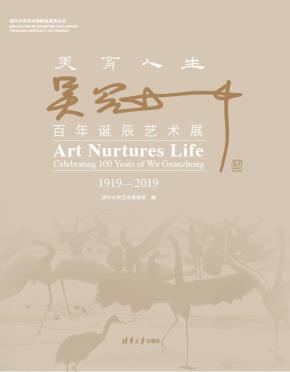
美育人生:吴冠中百年诞辰艺术展"
为纪念吴冠中诞辰100周年,清华大学艺术博馆策划了“吴冠中百年诞辰纪念展”。本书汇集了是本次特展的展览作品,展示中国艺术大家吴冠中的艺术理论风采,缅怀缅怀他对中国艺术的贡献。本书希望观众通过文章与作品体会吴冠中先生以美育人的艺术精神,一生对绘画创作与艺术观念孜孜不倦的探索精神, 展现出他的杰出成就与伟大贡献。
前 言
Foreword
让大师风范在校园永驻
邱勇
清华大学校长 中国科学院院士
今年是中华人民共和国成立70周年,也是吴冠中先生诞辰100周年。清华大学在今年7月1日,中国共产党成立98周年的喜庆日子里,迎来了由吴可雨先生和夫人于静女士亲自送来的吴冠中先生的66件传世之作。这些作品是一笔不可估量的艺术财富。我们深切地感受到了吴冠中先生、吴可雨先生、于静女士及家人,对艺术教育的重视和对清华大学的深情厚谊。吴冠中先生曾说过:“国家和人民养育了我,我的作品都是国家和人民的。”清华大学为拥有吴冠中先生这样的艺术大师感到无比自豪,清华全体师生也真切体会到吴冠中先生作为德艺双馨的人民艺术家的高尚品格。
吴冠中先生是杰出的艺术大师和艺术教育家,是中国当代美术发展的一面重要旗帜。吴先生一生致力于中国艺术的探索与创新,他提出的“风筝不断线”的理念,将具象与抽象两种绘画形态融为一体,创造出中西结合、雅俗共赏的意象世界,使中国传统艺术的精神得以弘扬光大,将油画民族化和中国画现代化推向了新的境界。吴冠中先生对学生充满爱心,他一直鼓励年轻人要有创新的想象,从而启迪了一批青年人的艺术生涯以及后来的成长。清华老校长梅贻琦曾有这样一句名言:“所谓大学者,非谓有大楼之谓也,有大师之谓也。”于大学而言,大师的意义在于其推动人类文明进步的学术造诣,更在于其影响人类心灵的高洁品行。教师决定了一所学校的水平,而大师则代表了一所学校的高度。在延续卓越和传承精神的过程中,一所好的大学一定会竭尽所能地让大师的风范在校园永驻。只有如此,大学才能够坚定长久地发展进步,大学才能成为人类社会的精神文化高地。
艺术是人类智慧和思想沉淀结晶下来的灿烂财富,凝聚着国家民族的文化和艺术家的心血。清华大学长期致力于推动吴冠中先生艺术作品、美术理论、美育思想的收集整理和研究传播工作。2010年8月29日,学校正式成立了清华大学吴冠中艺术研究中心。九年来,研究中心抢救性地搜集整理了先生的大量作品、史料和文论,出版了《吴冠中追思文集》和《吴冠中全集·续集》第十卷,培养的12名博士后的13部研究专著也即将出版,举办了学术纪念活动30余场。今年,恰逢吴冠中先生诞辰100周年,我们将举办“美育人生”艺术展和国际学术报告会等纪念活动。清华大学还将发布吴冠中艺术研究数据库,通过开放性研究平台,将吴冠中先生的艺术珍宝与社会共享。
习近平总书记强调,要“坚持以美育人、以文化人,提高学生审美和人文素养”。大学承担着培养德智体美劳全面发展的社会主义建设者和接班人的重要任务。美育在培养健全人格中有着独特的作用。我们要在引导学生向美而行的过程中,让学生懂得如何感受美、欣赏美,进而培育美的素养、塑造美的心灵、涵养人生品位。美育是吴冠中先生奉献一生的事业。吴冠中先生曾在《美育的苏醒》一文中提倡因材施教的美术教育,提倡向大众宣传美育,使欣赏美成为一种社会倾向。进入新百年,清华大学全面加强了艺术教育。目前,全校每年开设美育课程超过220门次,选修学生超过万人。2016年9月10日,吴冠中先生寄予了高度期望的艺术博物馆正式开馆,秉持“彰显人文、荟萃艺术,精品展藏、学术研究,内外交流、资讯传播,涵养新风、化育菁华”的理念,艺术博物馆已经举办高水平展览50个,接待海内外观众130余万人次。2006年,吴冠中先生曾与李政道先生在第二届艺术与科学国际作品展暨学术研讨会上,分别发表了题为《推翻成见,创造未知》和《对称与不对称》的演讲。两位大师畅谈艺术与科学,强调艺术和科学在思想上是相通的,在艺术和科学界引起了巨大反响。
时代呼唤美育,艺术引领心灵。吴冠中先生在《美术自助餐》一文中曾写过:“年轻人能在大师们的终点起跑,真是莫大的幸运。”有着吴冠中先生这样倾心育人的大师,也是清华大学的幸运。面向未来,清华大学将传承吴冠中先生的大爱之心和大美之艺,继续推动艺术学科和美育工作的创新发展,争取早日将清华大学美术学科建设成为世界艺术教育重镇,为中国艺术更加开放地走向世界、为人类艺术传承创新作出新的更大贡献!
“高山安可仰,徒此揖清芬。”最后,我想借用李白写给孟浩然的诗句,再次表达对吴冠中先生的深切怀念和崇高敬意!
Preserving the Excellency of the Maestro on Campus
Qiu Yong
President, Tsinghua University
Academician, China Academy of Science
This year the People’s Republic of China celebrates the 70th Anniversary of its founding, which is also the centennial of Wu Guanzhong’s birth. On July 1st this year, the occasion to celebrate 98th anniversary of the founding of the Chinese Communist Party, Tsinghua University is graced with 66 masterpieces of Wu Guanzhong, donated by his son Wu Keyu and daughter-in-law Yu Jing. This is an invaluable artistic wealth for the institution. This gesture made us realize Wu Guanzhong, Wu Keyu, Yu Jing and other family members’ attention paid to art education and their great generosity for Tsinghua University. Wu Guanzhong has once said, “It is the nation and the people who have nurtured me, my works belong to the nation and the people.” Tsinghua University is incredibly proud to hold the works of the great art master Wu Guangzhong’s work in its collection, while the faculty members and all the students truly recognize Wu Guanzhong’s utmost integrity for being an outstanding morally and artistically achieved artist of the people.
Wu Guanzhong is an outstanding maestro of art and an art educator, who is an icon in the development of Chinese contemporary art. Wu devoted his life to the exploration and innovation of Chinese art. He proposed the notion of “Kite harnessed on a line”, which integrates figuration and abstraction into a world of imagery that combines Chinese features with Western art, the elegant to the mundane, allowing the essence of traditional Chinese art to be popularized, and pushing the nationalization of oil painting and the modernization of ink painting to new realms. Wu Guanzhong is full of love and compassion for his students, who always encouraged young people to have innovative imaginations, which inspired a group of young people’s artistic career and growth. The former principal of Tsinghua University, Mei Yiqi, once proclaimed, “A so-called university, is not necessarily the ones with the big buildings, or to house great masters.” As far as the university is concerned, the significance of the master lies in its academic attainments that promote the progress of human civilization, as well as, in its noble character that affects the human mind. The teacher determines the caliber of an educational institution, while the master represents the height it has attained. In the process of continuing excellence and inheriting the spirit, a good university will do its utmost to preserve the excellency of the maestro on campus. Only in this way can universities develop and progress over time and become the spiritual and cultural highlands of human society.
Art is a splendid wealth of human wisdom and thoughts, which embodies the culture of the nation and the efforts of artists. Tsinghua University has long been committed to promoting the collection, research, and dissemination of Wu Guanzhong’s works of art, art theory, and aesthetic education. On August 29, 2010, the school officially established the Wu Guanzhong Art Research Center of Tsinghua University. In the past nine years, the research center has collected and compiled a large number of works, historical materials, and literary theories, and published the tenth volume of Wu Guanzhong’s Collections and Wu Guanzhong’s Complete Works — Sequels. The 13 research monographs of 12 postdoctoral fellows will also be forthcoming. More than 30 academic commemorative events were held. This year coincides with the centennial birth of Wu Guanzhong, we will present a commemorative program including the “Arts of Life” art exhibition and the international academic forum. Tsinghua University will also publish the Wu Guanzhong Art Research Database, sharing the artistic treasures of Wu Guanzhong with the society through an open research platform.
General Secretary Xi Jinping stressed that it is necessary to “adhere to the use for aesthetics education and to improve students’ aesthetic and humanistic qualities.” The university bears the important responsibilities of cultivating the socialist builders and successors in their all-round development of morality, intelligence, physical, aesthetics and labour education. Aesthetic education has a unique role in cultivating a healthy personality. In the process of guiding students in aesthetic appreciation, we must let students know how to sense and appreciate beauty, and then cultivating aesthetic sense, shaping a good heart and the virtue of life. Aesthetic education has been the reason of Wu Guanzhong’s life dedication. Wu once advocated the art education tailoring to the aptitude of the students in the article “Awakening of Aesthetic Education” and advocated the promotion of aesthetic education to the public, making the appreciation of aesthetics a social engagement. In the new century, Tsinghua University has comprehensively strengthened art education. At present, the school offers more than 220 art-related courses every year, with more than 10,000 students. On September 10, 2016 marked the official opening of the Art Museum, which Wu Guanzhong highly anticipated. It adheres to the concept of “representing humanities, exhibiting art, collecting masterpieces, conducting academic research, and internal and external exchanges, disseminating information dissemination, conserving new styles, and engendering culture”. The Art Museum has hosted 50 high-level exhibitions, receiving more than 1.3 million visitors from home and abroad. In 2006, Wu Guanzhong and Li Zhengdao delivered a speech entitled “Overturning Prejudice, Creating Unknown” and “Symmetry and Asymmetry” at the 2nd International Exhibition of Art and Science and Academic Seminar. The two masters talked about art and science, emphasizing that art and science are intellectually connected, that stirred an immense response in the art and science communities.
The times call for aesthetic education, and art leads the mind and soul. As Wu Guanzhong wrote in “Art Buffet”, “It is a great fortune for young people to start at the finish lines of the masters.” To have had a great maestro like Wu Guanzhong who has devoted his life to art education is, in fact, a fortune for Tsinghua University. Facing the future, Tsinghua University will inherit the great love and great aesthetic heritage from Wu Guanzhong, and continue to promote the innovative development of art disciplines and aesthetic education and strive to build the artistic disciplines of Tsinghua University into a world-class institution. For Chinese art to open to the world and for the heritage of art, the institution is devoted to making newer and greater contributions!
“Your virtues high as the mountains, to you I bow, Fragrant Fountain”. Finally, I would like to borrow Li Bai’s verses written to Meng Haoran to express once again my deepest nostalgia and highest respect for Wu Guanzhong!
前 言
陈维德
新加坡国家美术馆馆长
在20世纪蓬勃发展的亚洲现代主义景观之中,吴冠中无疑是其中最杰出和最具启发性的艺术家之一。他的艺术创作为在非西方地区生活和工作的艺术家提供了宝贵的经验——如何在复杂和具有挑战性的社会文化环境中寻求艺术的现代性。事实上,20世纪许多亚洲艺术家都遭遇了西方现代化的巨大冲击,获得了跨文化的亲身体验,并随之面临着一系关键问题的思考:东方与西方,传统与现代。
吴冠中以探索欧洲现代主义与中国绘画和美学传统之间的潜在相关性作为艺术创作的途径。穿梭在油画和水墨之间,他的艺术在这两个体系之间构架了桥梁,从媒材技法、绘画语言和创作观念等方面对两者加以融合。值得注意的是,他也在创作中呈现这两个不同美学体系所带来的差异,并且让差异的对比成为他的艺术表达中极具变革性的部分。他的作品因此往往包含着“混杂”的视觉特征。的确,他也评价自己的艺术为 “混血儿” 。 这种经过深思熟虑的创作方法使他超越了简单的 “东方/西方”的二元框架。
更可贵的是,吴冠中在艺术创作中一贯坚持自主性。他将自己的艺术牢牢地扎根于所处的本土情境之中,针对本土文化所关注的问题和内在动力做出真实诚恳的回应。他对艺术自主性的坚定承诺引领他克服了各种处境和挑战,得以实现独立于主流或权威范式之外的个人艺术表达,这成就了吴冠中艺术中最有价值和最持久的“现代”特质。
新加坡国家美术馆有幸从吴冠中及其家人的慷慨捐赠中获益,自2015年开馆以来我馆已经策划了一系列关于艺术家的主题展览,包括开馆的展览“吴冠中:大美无垠”(2015—2016),“风景哪边好”(2016—2017),以及“吴冠中:文心与画境”(2018—2019)(此展览是为纪念艺术家诞辰一百周年,并旨在探讨吴冠中的文学和绘画创作之间的关联)。我馆将继续努力在亚洲和全球现代艺术的跨文化和跨国界语境之中,对这位中国大师的艺术进行深入的研究和探讨。
我馆很荣幸能与中国文学艺术界联合会、清华大学、中国美术家协会、中国美术馆联合主办“美育人生——吴冠中百年诞辰艺术展”。展览将展出清华大学、中国美术馆和新加坡国家美术馆的典藏精品,这是所有主办机构共同努力的成果。“美育人生”不仅呈现了吴冠中的艺术创作,也体现了他对艺术教育的终生奉献,自20世纪初以来美育发展一直是中国现代化进程的一部分。吴冠中的艺术教育理念与他的艺术创作原则相契合,其核心是鼓励和引导学生实现个性化的表达,对此他在大量的文章、讲座、教学中都有所阐述。我真诚地希望中国观众能够喜爱欣赏此次展览,并以此开启艺术家和观众之间充满活力的交流,这正是吴冠中毕生所追求的。
Director’s Foreword
Eugene Tan
Director, National Gallery Singapore
Wu Guanzhong is undoubtedly one of the most prominent and inspiring figures within the landscape of Asian modernism which flourished during the 20th century. His art offers a valuable reference for artists living and working in non-Western regions, searching for artistic modernity within highly complex and challenging socio-cultural environments. Indeed, many Asian artists of the 20th century who encountered the impact of Western modernisation and had also gained first-hand transcultural experiences grappled with a series of duelling concerns: Eastern versus Western, tradition versus modernity.
Wu set the course for his creative journey when he chose to explore the potential relevance between European modernism and the legacy of Chinese painting and aesthetics. Traversing between the media of oil and ink wash, his art embodies a bridge between the two artistic systems, integrating their techniques, pictorial idioms, and conceptual principles. Noticeably, Wu also addresses the divergences between these two aesthetic domains, whose contrasts form a dynamic part of his artistic expression. His work thus often contains hybridised visual qualities, and indeed, he himself describes his art as a “child of hybridity.” This deeply considered approach led him to transcend the dichotomous framework of “East versus West”.
More significant is Wu’s consistently autonomous approach to creating art. He firmly situated his art within the specific circumstances of his place and time, developing authentic responses to local concerns and dynamics. His strong commitment to artistic autonomy guided him through varied situations and challenges to achieve an individual expression that stood apart from the established conventions of the time. This became the most valuable and enduring element of the “modern” in Wu’s oeuvre.
National Gallery Singapore has been fortunate to benefit from generous donations from Wu Guanzhong and his family, and has organised a series of thematic exhibitions on the artist since opening in 2015. These include the inaugural exhibition Wu Guanzhong: Beauty Beyond Form (2015–2016), A Walk Through the Nature (2016–2017), and Wu Guanzhong: Expressions of Pen and Palette (2018–2019), the latter of which is held in celebration of the centennial of the artist’s birth and examines the creative resonance between Wu’s writings and paintings. The Gallery will continue its curatorial inquiry into the art of this Chinese master, situating our efforts within the context of transcultural and transnational dialogues of Asian and global modern art.
We are very pleased to be collaborating with China Federation of Literary and Art Circles, Tsinghua University, China Artists Association and The National Art Museum of China for this exhibition, Art Nurtures Life: Celebrating 100 Years of Wu Guanzhong. The exhibition features selected works from the collections of Tsinghua University, the National Art Museum of China and National Gallery Singapore, and is the result of collaborative efforts among all the institutions. Art Nurtures Life not only highlights Wu’s artistic expression but also his lifelong devotion to art education, which has been part of China’s modernisation since the early 20th century. Like his principles on creating art, Wu’s ideology on aesthetic education centers on inspiring and guiding students to achieve individual expressions, as evinced by a large body of his writings, talks and teachings. I sincerely hope that the Chinese audience will enjoy this exhibition, and that it will encourage the sort of dynamic dialogue between artist and audience that Wu Guanzhong strove for during his lifetime.


目 录
Contents
前言
Foreword
001
002
006
008
012
024
让大师风范在校园永驻/邱勇
Preserving the Excellency of the Maestro on Campus / Qiu Yong
前言/陈维德
Director’s Foreword / Eugene Tan
时代的歌者——纪念吴冠中先生百年诞辰/冯远
He Who Gives Praise to the Time—Celebrating the Centennial of Wu Guanzhong’s Birth / Feng Yuan
以文字景仰吴冠中先生/吴为山
Paying Respect to Wu Guanzhong through Writing / Wu Weishan
吴冠中先生的艺术精神拥有永恒的力量/范迪安
The Eternal Power of Wu Guanzhong’s Artistic Spirit / Fan Di’an
004
007
010
018
026
策展人语
Curatorial Discourse
029
030
033
036
037
038
039
040
042
044
047
形式美——继承传统走向现代的另一条路.纪念吴冠中先生诞辰100周年/刘巨德
Formal Aesthetics—An alternative path for passing on tradition and marching towards modernity
In commemoration of Wu Guanzhong Centennial / Liu Jude
最美的人生/苏丹
The Most Beautiful Life / Su Dan
策展人语/蔡珩
Curatorial Notes / Cai Heng
永恒的精神遗产/鲁晓波
A Lasting Spiritual Heritage / Lu Xiaobo
向人民艺术家吴冠中致敬/卢新华
Paying Tribute to People’s Artist, Wu Guanzhong / Lu Xinhua
弁言
Preface
051
052
056
060
066
风雨独行人/吴可雨
Charging Forward in the Storm / Wu Keyu
我的父亲母亲/吴乙丁
My Father and Mother / Wu Yiding
引言
Introduction
071
072
076
美育人生——吴冠中百年诞辰艺术展/刘巨德
Art Nurtures Life—Celebrating 100 Years of Wu Guanzhong / Liu Jude
风筝不断线
Kite with an Unbroken Line
083
形式是画家的生命线
Form is an Artist.s Lifeblood
127
风格即背影
Style is an Artist’s Silhouette
175
美感无尽
Infinite Sense of Beauty
231
艺术无国界
Art Without Boundaries
251
吴冠中年表
Chronology of Wu Guanzhong
285
作品索引
Index of Artworks
311
吴冠中先生是杰出的艺术大师和艺术教育家,是中国当代美术发展的一面重要旗帜。吴先生一生致力于中国艺术的探索与创新,将具象与抽象两种绘画形态融为一体,创造出中西结合、雅俗共赏的意象世界,使中国传统艺术的精神得以弘扬光大,将油画民族化和中国画现代化推向了新的境界。值吴冠中先生诞辰100 周年之际,清华大学艺术博物馆举办以“美育人生”为主题的大展,对吴先生一生在国民美育启蒙中所产生的影响做一次宏大的表述。新加坡国家美术馆、中国美术馆分别为展览出借了精美的作品,并与清华大学艺术博物馆、清华大学美术学院吴冠中艺术研究中心的展览团队一起,通过紧密的合作,为此展奉献了精良的图录以飨读者。
清华大学艺术博物馆 冯远,中国画家、美术教育家。1952年生于上海。1980年毕业于浙江美术学院中国画研究生班并留校执教,曾任学院教务处长、副院长、教授等职,第十一、十二届全国政协委员。1999年任中华人民共和国文化部教育科技司司长,2001年任艺术司司长,2004年任中国美术馆馆长,2008年任中国文学艺术界联合会副主席、党组成员、书记处书记,现任中央文史研究馆副馆长,中国文学艺术界联合会副主席、中国美术家协会副主席、清华大学美术学院名誉院长、博士研究生导师。