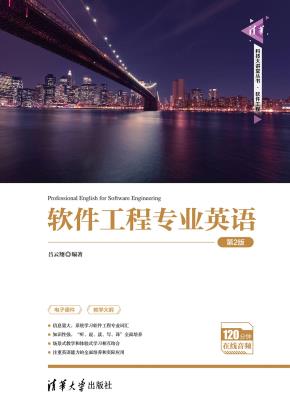
软件工程专业英语"
本书是按照**的《大学英语教学大纲》对专业英语的要求,以一个大学本科二年级学生Kevin与他的同学在一个酒店管理信息系统的实际项目中进行专业实践,直至经过求职面试进入一家IT企业工作为主线,将IT行业中所需的英语“听、说、读、写、译”基本技能与项目从开始到结束的整个流程有机地融合起来。
本书包括10个单元,每个单元都分为听与说、读与译以及模拟写作部分。听与说部分描述了软件开发的技术场景; 读与译部分给出了与软件工程相关的文章; 模拟写作部分则重点介绍如何撰写技术/商务文档和技术报告等。
本书注重听、说、读、写、译能力的全面发展,适用于高等院校软件工程及其相关专业、软件学院、各类职业信息技术学院和专业培训机构等。本书配有教辅资源,包括听与说的录音、为教师提供授课PPT,可登录清华大学出版社网站www.tup.com.cn下载。
第2版
本书初版《软件工程专业英语》于2014年12月正式出版以来,经过了几次印刷,被许多高校选为“软件工程专业英语”课程的教材,深受师生的喜爱,获得了良好的社会效益。从另外一个角度来看,作者有责任和义务维护好本书的质量,及时更新本书的内容,做到与时俱进。
这些年来,信息技术的发展突飞猛进,在本书初版的内容中已经涉及的一些技术,由于有了进一步的发展,也有必要对其内容做出及时的更新。本次修订改动内容如下。
(1) 在听与说(Listening and Speaking)部分中做了微小的改动,如对所用工具或软件版本的更新,以及对年代的更新。
(2) 在读与译(Reading and Translating)部分中,有关Section A的文章,只替换了Unit 9中的文章,但替换了Section B的所有文章。
(3) 对每一个单元的模拟写作(Simulated Writing)部分都重新进行了梳理,尤其是对样例。
本书配有教辅资源,包括听与说部分的录音、授课PPT、每个单元各部分内容的翻译,需要的读者可登录清华大学出版社网站www.tup.com.cn下载。
本书的作者为吕云翔,曾洪立参与了部分内容的写作以及各种教辅资源的制作。
最后,请读者不吝赐教,及时提出宝贵意见。
吕云翔
2021年10月
第1版
英语是全球IT行业的行业语言,英语技能是IT行业最基本的技能之一,因此熟练掌握相关英语技能对于发展职业生涯具有积极的影响。
本书是按照最新的《大学英语教学大纲》对专业英语的要求,为开设“软件工程专业英语”课程而编写的教材。本书在满足软件工程英语教学的同时,注重学生的实际应用与调动学生的学习兴趣。本书选材广泛,内容丰富,涉及软件开发的项目启动、需求获取、项目计划、团队合作、系统设计、系统实现、系统测试和系统交付的完整流程,并包括如何进行面试和在IT企业工作的场景。为了拓展知识,还包括了云计算、移动互联网、大数据、物联网、社交网络、基于位置的服务、通用计算图形处理器、比特币、三维打印和谷歌眼镜等深刻影响着人们生活的信息技术。
本书设计以一个大学本科二年级学生Kevin与他的同学在一个酒店管理信息系统的实际项目中进行专业实践,直到经过求职面试进入一个IT企业工作,成为这个企业的软件从业人员为主线来组织内容,包含在IT行业中所需掌握的英语听说读写译基本技能,涉及从接受项目开始到项目开发完毕这样一个完整的软件开发流程中IT相关人员所需的英语听说读写译技能。
本书共有10个单元,每个单元的训练都分为听与说、读与译、写等方面。听力部分概要讲述与软件工程相关的知识,对话部分涉及实际工作中与同学、客户或同事之间的交流; 读与译的部分包括与软件工程相关的文章和与IT相关的最新文章; 写作部分讲解如何撰写软件工程文档以及商务文档等。本书注重英语听说读写译能力的全面发展,并与软件工程的专业课程紧密结合,采用场景式教学和体验式学习相结合的方式,实用性强。
另外,本书配有教辅资源,包括听与说的录音、授课PPT,需要的教师可登录清华大学出版社网站www.tup.com.cn下载。使用本书时,建议教学时长为36~48学时,教师可根据具体情况进行取舍。
本书适用于高等院校软件工程、计算机科学及其相关专业、软件学院、各类职业信息技术学院和专业培训机构等。书中设计的听力、口语、阅读、写作和翻译的场景融合了角色扮演、多人对话、小组讨论等行之有效的训练方法,能较好地满足课堂教学的需要,有利于学生在课堂上的即时消化吸收。
本书在编写过程中得到了美国专家Eric Langager和Law Phew的指导,以及杨雪的大力帮助,在此表示衷心的感谢。
本书试图融合听、说、读、写、译各项技能训练,书中难免会有不尽如人意之处,敬请专家与读者不吝赐教,以使本书臻于完善。
编者
2014年6月于北京


Contents
随书资源
Unit 1Starting a Software Project软件项目启动00
Part 1Listening & Speaking 00
Dialogue: Starting a Software Project00
Listening Comprehension: Software Engineering00
Dictation: Mythical ManMonth & No Silver Bullet00
Part 2Reading & Translating00
Section A: Software Engineering00
Section B: 5 Areas of Software Engineering AI will Transform0
Part 3Simulated Writing: Memo0
Unit 2Capturing the Requirements需求获取0
Part 1Listening & Speaking 0
Dialogue: Communication with Customers0
Listening Comprehension: Software Requirements0
Dictation: The Difference between Customer and EndUser0
Part 2Reading & Translating0
Section A: Software Requirements0
Section B: Use Cases & Scenarios0
Part 3Simulated Writing: Software Requirements Specification0
Unit 3Planning the Project项目策划0
Part 1Listening & Speaking 0
Dialogue: Software Project Planning0
Listening Comprehension: Software Project Planning0
Dictation: Four Variables in Projects0
Part 2Reading & Translating0
Section A: Software Project Plan0
Section B: AIpowered Project Management in the Near Future0
Part 3Simulated Writing: Software Project Plan0
Unit 4Working in a Team团队合作
Part 1Listening & Speaking
Dialogue: Team Structure
Listening Comprehension: Project Team
Dictation: Agile Software Development
Part 2Reading & Translating
Section A: Team Structure
Section B: How to Build a Highly Effective Software
Development Team
Part 3Simulated Writing: PowerPoint Presentation
Unit 5Designing the System系统设计
Part 1Listening & Speaking
Dialogue: Software Design
Listening Comprehension: Software Design
Dictation: User Interface Design
Part 2Reading & Translating
Section A: Software Design
Section B: What is the Difference between UX Design and
UI Design?
Part 3Simulated Writing: Software Design Specification
Unit 6Implementing the System系统实现
Part 1Listening & Speaking
Dialogue: Creating HighQuality Code
Listening Comprehension: Writing the Code
Dictation: Concentrate on the Vital Few, Not the Trivial Many
Part 2Reading & Translating
Section A: Computer Programming
Section B: GoodEnough Software
Part 3Simulated Writing: Progress Report
Unit 7Testing the System系统测试
Part 1Listening & Speaking
Dialogue: Software Testing
Listening Comprehension: Software Testing
Dictation: Smoke Test
Part 2Reading & Translating
Section A: Software Testing
Section B: Testers and Programmers Working Together
Part 3Simulated Writing: Software Test Specification
Unit 8Delivering the System系统交付
Part 1Listening & Speaking
Dialogue: Software Deployment
Listening Comprehension: Software Delivery
Dictation: Bug and Debugging
Part 2Reading & Translating
Section A: Software Maintenance
Section B: Why Software Delivery Management Matters
Part 3Simulated Writing: User Guide
Unit 9Taking an Interview参加面试
Part 1Listening & Speaking
Dialogue: Interview
Listening Comprehension: Expansion Company
Dictation: Software Configuration Management
Part 2Reading & Translating
Section A: Building Software Products vs Platforms
Section B: Secure Software Development Life Cycle
Part 3Simulated Writing: Resume
Unit 10Beginning Your Work开始工作
Part 1Listening & Speaking
Dialogue: Beginning Your Work
Listening Comprehension: The Organizational Structure of a Company
Dictation: Open Source Movement
Part 2Reading & Translating
Section A: The Organizational Structure of a Company
Section B: Why We Need to Address Ethical Issues in
Software Engineering
Part 3Simulated Writing: Business Email
Glossary(词汇表)
Abbreviation(缩略语表)
Answers(练习答案)
《软件工程专业英语》于2014年12月正式出版以来,经过了几次印刷。许多高校将其作为“软件工程专业英语”课程的教材,深受这些学校师生的钟爱,获得了良好的社会效益。但从另外一个角度来看,作者有责任和义务维护好这本书的质量,已经及时更新本书的内容,做到与时俱进。本书配有教辅资源,包括听与说录音、授课PPT、每个单元各部分内容的翻译,需要的
教师可登录清华大学出版社网站www.tup.com.cn下载。
北京航空航天大学软件学院副教授。目前研究领域包括:软件工程、大数据、人工智能。