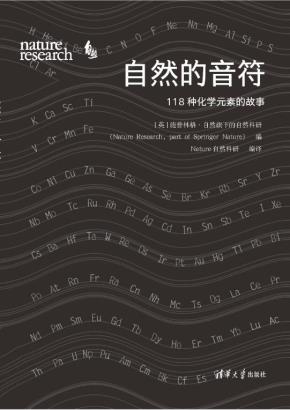
自然的音符:118种化学元素的故事"
《自然的音符:118种化学元素的故事》由Nature科研译自《自然-化学》(Nature Chemistry)In Your Element专栏。是所有图书中为数不多的,覆盖当前全部已发现的118种化学元素的科普图书,每一种元素都是邀请世界上对它研究最为深入的科学家之一撰写,专业权威,生动有趣。适合中学生及以上所有对化学元素感兴趣的读者阅读。本书由Nature Chemistry高级编辑作序。
序
Preface
《自然-化学》(Nature Chemistry)
从2009年4月的创刊号开始,十
年以来每期的最后一页都属于“In
Your Element”这个专栏,该专栏
每期介绍一种化学元素——这些元
素就像积木块一样构成了我们周围
的一切物质。目前已知的元素有
118种,另外我们也介绍了两种相
当特别的氢同位素:氘和氚。这就
是说,该专栏开办了整整10年,延
续120期,并刚好在2019年3月
正式结束,恰逢国际元素周期表年
(https://www.iypt2019.org/)——旨
在纪念德米特里·门捷列夫(Dmitri
Mendeleev)早期版本的元素周期
Starting in the inaugural issue
of Nature Chemistry in April 2009
and throughout its first ten years,
the last page of each month’s
journal was occupied by the ‘In
Your Element’ (IYE) column, which
explored – one element at a time –
the building blocks that make up
everything around us. There are
currently 118 known elements, and
we also included the two rather
special isotopes of hydrogen:
deuterium and tritium. This means
that the IYE feature happened to run
for exactly ten years, spanning 120
issues of the journal. With fortuitous
timing, it came to an end in March
2019 during the International Year
of the Periodic Table (https://www.
iypt2019.org/), which celebrates
II
自然的音符:118种化学元素的故事
表问世150周年,元素周期表大概
已成为化学最普遍的象征之一。
本书是该专栏120篇文章的合
集。起初,这些文章并无固定模式,
只是为了分享元素的故事,既增长
见识,又寓教于乐。这些文章粹集
了各种珍闻片段,包括元素的历史
记述、词源学意义、化学特性和相
关的个人轶事等。一路走来,我们
也了解到很多关于元素周期表及其
内容的知识,所获匪浅。
元素周期表看起来相对简单,
所有的元素都按原子序数递增排列,
排列有序的行和列反映了元素化学
性质的相似性和递变趋势。今天人
们或许很容易认为元素周期表理当
如此。然而,这张我们都熟悉的表
格却是由众多科学家煞费苦心、几
经努力才完成的。尽管门捷列夫被
普遍认为是元素周期表的缔造者,
但发现元素物理或化学性质的周期
性,并试图以具有科学意义的方式
排列它们的还有其他人,门捷列夫
甚至不是第一个这样做的人。但是
他在1869年提出的元素周期表有
其独特之处:在列入当时已知的63
种元素之外,他还为一些他认为已
the 150th anniversary of Dmitri
Mendeleev’s early version of the
chart that would become one of
the most ubiquitous emblems of
chemistry.
This book is the collection of
these 120 IYE essays. From the
very beginning there was no set
formula for these articles; they were
simply intended to be informative
and entertaining stories about an
element. They gather together a
wide variety of snippets, ranging
from historical and etymological
accounts to chemical characteristics
to personal anecdotes, and we
have learnt a great deal about the
periodic table, and its content, along
the way.
With its relatively simple
appearance – all of the elements
catalogued in order of increasing
atomic number, arranged in neat
rows and columns that reflect
similarities and trends in their
behaviour – it’s perhaps easy
today to take the periodic table for
granted. Yet the familiar chart has
been painstakingly shaped by the
work of many scientists. Although
Mendeleev is widely recognized as
the creator of the periodic table,
he wasn’t the only one – or even
the first one – to have noticed a
periodicity in the elements’ physical
or chemical behaviour, and to
attempt to arrange them in a
III
序 / Preface
存在但尚未被发现的元素留了空位。
其中一些“缺失”的元素确实在几
年之内被陆续发现,其特性与门捷
列夫在排列它们的位置时所预测的
非常相近,这极大地增加了他所提
出的元素周期排列方式的可信度。
然而,填补最后一个元素空位花了
近70年的时间,而且是以一种完全
不同的元素发现方式完成的:位于
元素周期表d区中间的高放射性元
素锝并不是在自然界中发现的,而
是1937年经人工合成制得并最终
获得确认。
有些元素被发现后最初曾难以
归类,这推动了元素周期表的扩展。
例如,氪、氖和氙等稀有气体在短
短几周内相继被发现,但在门捷列
夫的周期表上却好些年没有它们的
位置,直到1902年,人们才扫清
疑惑将它们列入表中。另一个重大
调整发生在20世纪40年代中期,
格伦·西博格(Glenn Seaborg)将
锕系元素的位置移到镧系元素下面,
这次重排引导科学家们发现了铀之
后的元素。
我们所熟悉的元素周期表并非
一成不变。我们专栏的文章曾讲述
manner that made scientific sense.
But his 1869 version exhibited
noteworthy features: it included all
the 63 then-known elements as well
as several gaps for elements that he
believed existed but hadn’t yet been
discovered. Some of those ‘missing’
elements did indeed turn up within
a matter of years – and exhibited
properties that closely matched
the ones Mendeleev had predicted
based on their location in the table,
lending great credibility to his
periodic placement. It would take
nearly 7 decades, however, to fill the
last of his blank tiles, in a manner
that would represent a fundamental
departure in element discovery:
rather than being found in nature,
technetium – a highly radioactive
element in the middle of the d-
block – was created artificially and
finally identified in 1937.
The discovery of some
other elements initially caused
classification problems, and
prompted expansions of the table.
The noble gases for example – of
which krypton, neon and xenon
were discovered within just weeks
of each other – had no place on
Mendeleev’s chart for several
puzzling years until they were finally
given their own column in 1902.
Another major adjustment came
in the mid-1940s when Glenn
Seaborg moved the actinide series
自然的音符:118种化学元素的故事
人们如何就第3副族元素的排列展
开了持续不断的争论——镧和锕,
或者镥和铹是否应位于钪和钇之
下?铹可否被认为是p区元素?
稀土的发现可谓趣事连连(虽
然名中带“稀”,但在地壳中其实并
不那么稀有,其中最常见的稀土元
素铈的储量几乎和铜一样丰富)。约
翰·加多林(Johan Gadolin)曾猜
测有一种新元素存在,却因为担心
稀土元素会“越来越多”,而不愿意
承认,该元素现被称为钆。1843年,
卡尔·莫桑德(Carl Mosander)为
了寻找两种新元素,对氧化铒和氧
化铽进行了分析,但是因为失误而
混淆了两种矿物的样本,“阴差阳错”
地导致他从氧化铽中分离出了铒,
从氧化铒中分离出了铽,后来两种
矿物的名称才被更换过来。
专栏的文章也经常引经据典。
例如,使用“既是诅咒,也是祝
福”来形容镝元素,这是借用《茶
花女》中有关爱情的描述;节选鲁
德亚德·吉卜林(Rudyard Kipling)
《冷铁》一诗的段落;引用儒勒·凡
尔纳(Jules Verne)的著作——他
在书中曾预见将水“分解成它的组
below that of the lanthanides; this
placement would guide scientists to
the discovery of elements beyond
uranium.
The table as we know it is still
not set in stone. The IYE essays
tell of an on-going debate on the
occupancy of group 3 – should
lanthanum and actinium, or lutetium
and lawrencium, sit below scandium
and yttrium? Can lawrencium even
be considered a p-block element?
The rare earths proved to be
a trove of discovery quirks (despite
their name these elements aren’t
all that rare in the Earth’s crust; the
most common one, cerium, is nearly
as abundant as copper). Johan
Gadolin, for example, guessed
the existence of a new element,
albeit reluctantly as he feared the
rare earths were ‘becoming far
too numerous’ – this very element
is now known as gadolinium. A
blunder caused some confusion
between two minerals: in 1843 Carl
Mosander analysed erbia and terbia
in search of two new elements. A
mix-up in his samples, however,
meant that he had isolated erbium
from terbia and terbium from
erbia; the minerals’ names were
subsequently swapped.
The IYE essays also feature
poetic passages: a description
of dysprosium – a curse and a
blessing – that is borrowed from
序 / Preface
成元素”作为燃料使用,还赞扬了
曾经一度比黄金还珍贵的轻金属铝。
很多有关p区元素的描述会让
人不寒而栗,因为这些元素显然具
有毒性,其早期使用受到了限制,
如火柴中的磷导致工人发生“磷毒
性颌骨坏死”,汞会引起现被称为
“疯帽病”的神经紊乱,还有就是铅
化合物(如“铅糖”)被广泛地使用。
相比之下,铋由于毒性较低,在重
金属中显得有些格格不入。然而,
在铋的左边,只隔了一个主族的同
一周期的铊,却是号称“茶杯投毒
者” (teacup poisoner)的英国连环
杀手的首选武器,或许这一元素本
不应该被发现。
一些会发光的放射性元素既诱
人也很危险。镭最初被称作一种神
奇的元素,被撒到各种东西里面,
包括水、食物、化妆品等(大概是
由于它阴差阳错地能使皮肤焕发光
彩的缘故)。现在,放射性元素已可
以安全地用于各种用途,从原子钟
到地质年代测定等。出乎意料的是,
有些还可以轻易买到,比如烟雾探
测器中使用的镅元素和无电池冷光
装置中的氚元素。
that of love in La Traviata; a stanza
from a poem by Rudyard Kipling
entitled 'Cold iron'; and excerpts
from Jules Verne’s books in which
he had foreseen the use of water as
a fuel ‘decomposed into its primitive
elements’, and written in praise of
aluminium – a light metal that was
once more precious than gold.
There are quite a few unnerving
accounts of early uses of p-block
elements that were curbed when
toxicity issues became painfully
obvious: phosphorus in matches
that plagued workers with a bone
necrosis called ‘phossy jaw’;
mercury causing the neurological
disorder now known as ‘mad hatter’
disease; the ubiquitous use of lead
compounds (including one dubbed
‘lead sugar’). In contrast, bismuth is
a bit of an oddity among the heavy
metals owing to its low toxicity. Only
two tiles to the left, though, sits
thallium – the weapon of choice of
an English serial killer nicknamed the
‘teacup poisoner’, and an element
that should perhaps have remained
altogether undiscovered.
A number of glowing,
radioactive elements also proved
dangerously alluring. Initially
purported to be a wonder element,
radium used to be sprinkled into
everything from water to food to
cosmetics (presumably making skin
glow for all the wrong reasons).
自然的音符:118种化学元素的故事
一些重元素的发现充满了争
议。这些争议是如此激烈,甚至被
称为“超镄元素战争”(transfer-
mium wars),为此还成立了特
别委员会——超镄元素工作组
(Transfermium Working Group),
去裁决争端和名称归属。那些在元
素周期表右下角的元素,在完全正
常的条件下,可以通过让原子核相
互撞击以诱导其短暂现身,这需要
使用看似直接出自科幻小说的装备,
以及极大的耐心。除了镄之外,原
子核无法以可称重的数量制备。但
科学家们并没有就此放弃,而是研
发了特殊的实验技术,例如“一次
一个原子”化学(one-atom-at-a-time
chemistry)。元素搜寻者们目前正
在精心制作更重的原子核,他们在
人工合成方面的任何成功都将显著
改变元素周期表的形状,因为现在
元素周期表的7行相似元素已没有
任何空白可填了。
再看元素周期表的另一端,有
些元素实际上已经存在了很久。例
如,氢和氦在宇宙大爆炸后大约38
万年便出现了。氧在生命的起源和
演化中起着关键的作用,氮则在多
Radioactive elements now safely
serve a variety of purposes from
atomic clocks to geological dating.
Some can also be purchased
surprisingly easily: americium in
smoke detectors and tritium in
battery-free luminescent gadgets.
The stories of some of the
heavier elements are replete
with discovery disputes. The
controversies were so fierce that
they are referred to as ‘transfermium
wars’ and a special committee, the
Transfermium Working Group, was
created to adjudicate claims and
attribute names. Those elements
at the bottom right corner of
the periodic table can – under
exactly the right conditions, using
equipment that seem straight out
of science fiction, and with a lot of
patience – be coaxed into fleeting
existence by smashing nuclei into
each other. Beyond fermium, nuclei
cannot be prepared in weighable
quantities. Undeterred, scientists
have developed special experimental
techniques: there is such a thing
as one-atom-at-a-time chemistry.
Element hunters are currently
working on crafting ever heavier
nuclei; any synthetic success will
prompt a noticeable change in the
shape of the periodic table, as there
are no blank tiles left on its seven
familiar rows.
At the other end of the spectrum
序 / Preface
数情况下攸关生死。镍、铁和硫被
认为是早期生命形式所使用的物质,
而今天大多数生物则依赖铁元素。
另一种过渡金属铱,其氧化态范围
恰巧是已知最广的(从–3价到+9
价),它能为寻找恐龙灭绝的原因提
供线索。
专栏的文章展现了元素周期表
的深度和广度,我们非常感谢多年
来为专栏写稿的所有作者。我们十
分喜欢这个专栏,希望你也一样。
安妮·碧尚博士
《自然-化学》高级编辑
there are elements that have
essentially been around for ever.
Hydrogen and helium, for example,
appeared only around 380,000
years after the Big Bang. Oxygen
played a key role in the origin and
evolution of life and nitrogen is
intimately implicated in most matters
of life and death. Nickel, iron and
sulfur are thought to have been
used by early forms of life; today
most living organisms rely on iron.
Another transition metal, iridium –
which incidentally adopts the widest
known range of oxidation states
(from .3 to +9) – can provide clues
as to why the dinosaurs died out.
The IYE articles have reflected
the depth and breadth of the
periodic table, and we are extremely
grateful to all the writers who have
contributed to this feature over the
years. We have thoroughly enjoyed
it, and we hope you do too.
Dr. Anne Pichon
Senior Editor, Nature Chemistry
注:本序言主要基于2019年3
月《自然-化学》杂志发表的题为
《一个元素时代的终结》的社论。
Note: this preface is largely
based on the editorial published
in the March 2019 issue of Nature
Chemistry, entitled ‘End of an
elemental era’.


目 录
首先,要有氢 / 1
氘的主权 / 4
特别的氚 / 8
冷酷如氦 / 11
锂会成为新时代的黄金吗? / 14
铍更明亮的未来 / 18
硼的键合 / 21
碳的四个世界 / 25
生死看氮 / 28
氧之源 / 32
氟光普照/ 35
霓虹灯后的氖/ 39
钠的简述/ 42
镁光一闪/ 45
铝的魅力/ 48
飞跃山谷的硅/ 51
有善有恶磷之用/ 54
硫的魅力/ 58
氯的编年史/ 61
从空气中提取的氩/ 64
Ⅰ
Ⅱ
Ⅲ
自然的音符:118种化学元素的故事
强力的钾/ 67
流星般的钙/ 70
有违体育精神的钪/ 73
传奇的钛/ 76
钒的胜利/ 79
色彩斑斓的铬/ 82
保护者——锰/ 85
铁的新纪元/ 88
钴的小传/ 91
镍关存亡/ 94
靠谱如铜/ 97
锌的未知价值/ 101
爱抱团的镓/ 104
锗的萌发/ 107
砷的种种/ 110
硒的故事/ 114
善变的溴/ 117
重访氪的世界/ 120
钟表里的铷/ 123
锶的绯红闪光/ 126
来自伊特比的钇/ 129
锆元素简介/ 132
微妙的铌/ 135
造物于钼/ 138
锝的传说/ 141
了解钌元素/ 144
铑之角色/ 147
钯致反应/ 150
浮光跃银/ 153
镉的肖像/ 156
轻触金属铟/ 160
锡罐/ 163
Ⅳ
Ⅴ
锑的各种用途/ 167
扭动的碲/ 170
追碘/ 173
大显身手的氙/ 176
量子态的铯/ 180
亮且重的钡/ 183
藏匿的镧和它的捕手/ 186
镜头下的铈/ 189
独镨难现/ 192
新的名字——钕/ 195
钷测之谜/ 198
向钐致敬/ 201
聚光灯下的铕/ 204
神奇的磁性钆/ 207
发绿光的铽/ 210
各向异性的镝/ 213
平凡的钬/ 216
铒的发现之旅/ 219
异常迷人的铥/ 222
曲折反复的镱/ 225
综述镥/ 228
铪非镥/ 231
诱人的钽/ 234
钨的双名记/ 237
铼的辨识/ 240
重磅胜出的锇/ 243
铱之影响/ 246
在铂的闪光背后/ 249
金色未来/ 252
迷人的汞/ 255
有毒的铊/ 258
字里行间的铅/ 261
环保的铋/ 264
剧毒的钋/ 267
神秘的砹/ 270
回顾氡的识别/ 273
目 录
Ⅴ
Ⅵ
自然的音符:118种化学元素的故事
寻钫/ 276
镭的真相/ 279
活跃的锕/ 282
驰援核能的钍/ 285
“镤”朔迷离/ 288
铀的才华/ 292
隐身大镎/ 295
钚的新天地/ 298
揭开镅的发现/ 301
奇特的锔/ 304
平静的锫/ 307
锎之光/ 310
锿的解密/ 313
疯狂锻造的镄/ 316
第101号元素“入钔”/ 319
身世扑朔迷离的元素锘/ 322
铹在元素周期表上的位置/ 325
元素争夺战/ 328
匆匆一遇 / 331
的复杂研究/ 334
探 / 337
隐身的/ 340
.的致敬/ 343
..基石/ 346
..的诞生/ 349
欢迎?/ 352
朦胧的/ 355
一次一个原子/ 358
制镆故事/ 361
Uuh?不。这是!/ 364
目标/ 367
的传奇/ 370
译名对照/ 373
编后记/ 381
Ⅶ
来自Nature Chemistry的118种化学元素科普,谱写属于你的自然乐章
自然科研(Nature Research)提供一系列服务于科研界的优质产品与服务,包括了期刊、数据库和研究者服务等,例如《自然》及冠名“自然”的科学期刊。自然科研是全球领先的科学、教育和专业出版机构——施普林格?自然(Springer Nature)的一部分。