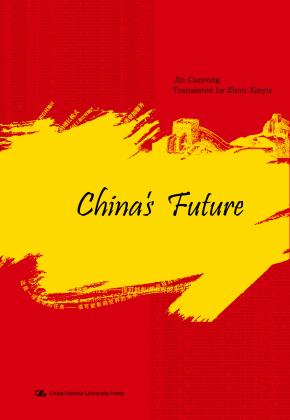
中国的未来(英文版)"
改革开放以来,中国迅速崛起壮大。强大的中国在发展过程中有没有遇到问题或难题?不断强大起来的中国是否已步入世界强国之林?中国政府是如何在发展中兼顾公平的?这些都是本书关注的重点。本书主要介绍并回答了以下几个重点问题:
1、从宏观的角度,围绕中国发展进程中出现的各种问题,介绍了我国政府的应对之方,分析了政策背后的发展思路。
2、从微观的视野,生动展现了中国政府如何积极应对近几年来国内国外的各类事件,如何统筹兼顾城乡、区域、经济社会、人与自然的和谐发展,如何树立负责任的大国形象。
3、从理论层面,诠释了中国发展中国家的属性,并用通俗易懂的语言,回答中国如何应对当前经济社会发展过程中以及国际关系中面临的一系列难题与矛盾,如:如何实现经济社会又好又快地发展?如何构建中国的大国形象?逐步强大起来的中国如何承担相应的国际责任?
As a scholar of international issues, I often have the chances to travel abroad and meet people from different countries. On one occasion, when I was travelling in Wyoming, I parked my car on the roadside and wanted to get some food in McDonald’s. The grassland was exceptionally beautiful in summer, so I decided to sit on a chair outdoors, enjoying the food and pleasant views in the sun.
Soon after, a big truck stopped outside the shop. The driver jumped off from the high cab. I caught sight of him and decided that he was a typical man living in American Midwest and perhaps, he was among those who are well-informed and knowledgeable. Then he came to me and talked with me.
“Are you a tourist? Japanese?” he asked me.
“No, I’m Chinese.”
In America, many people don’t know the differences between Japanese and Chinese. However, the driver obviously knew, because I could see sympathy on his face when he found out I was a Chinese. Then he told me what he thought America should do to better help other countries, including China.
What reveals from the driver’s eyes may be their first impression about China. A month later, I went to Washington for the "Youth Leadership" salon held by Center for Strategic and International Studies where I saw a completely different China. A man in the suit, probably in his thirties, came to me with coffee in hand. There was an air of confidence on his face, so I thought he was at a rising stage of his business. He looked excited when he knew that I came from China. With enthusiasm and praise, he said, “the future market is in China.” Then he started to discuss with me the new way of “doing business” in China. He said, “I plan to establish a website like Craiglist in China. How should I do it? You know Craiglist?”
I said I knew Craiglist. It is a city-wide information sharing website and everyone likes it. But as far as I know, there are already several similar websites in China, and they are in a fierce competition.
Then the man showed an expression of disbelief. I therefore wrote down the URL of those Chinese websites and gave it to him. He put it in the pocket carefully and then continued to ask me,
“Is there any website like Facebook in China?”
“Yes.”
“What about Amazon?”
I thought for a second, “Sure.”
I was a little worried that my answer would let him down. But soon I found that there were times when I overlooked the American optimism. He took a sip of the coffee and said, “Well, maybe I still can do something.”
“Maybe you could go to China first.” I said at last.
“Of course,” He took my hand.
Even in places like Washington, I would try to avoid asking people whether they had been to China or not. A majority of Americans haven’t been to China. They use products made in China every day and they see a lot of people from China. They get accustomed to it or accidentally feel disturbed by it——such as when there are reports on the quality of Chinese products. Now the campaign ads on TV say that the Chinese took away American s’ job opportunities and the US government owes China a large sum of money. Maybe all these will make Americans realize more about the existence of China, but these only serve to make Americans feel more confused about this country. In today’s western world, China is a hot topic. But among those who talk about China, few of them have really been here.
A few years ago, in Beijing, I served as the entourage and received Benjamin Gbagbo, a professor from University of Maryland in America. Professor Gbagbo was an outstanding political scientist and that was his second visit to Beijing. The first time was in the 1980s. On the way from the airport to the city, I thought that Professor Gbagbo would feel surprised about the scenes outside the window. You know, when he visited Beijing for the first time, all those gorgeous buildings were only stretches of wastelands. However, he kept silent all the way. In the following days, h


第一章 一个真实的中国
一、中国是谁?——关于中国的四幅图景
二.“他者错觉”——我们理解中国的方式
三.“泥足巨人?”——中国所面对的挑战
第二章 理解经济发展中的挑战及其应对
一、中国经济发展的魅力
二、中国经济发展的困境
三、推动经济又好又快发展的努力
四、充满希望的中国低碳经济之路
第三章 在社会转型发展中迎接新挑战
一、新成就:中国社会转型发展的人民期盼
二、新挑战:中国社会转型发展风险考验
三、新契机:中国社会转型发展的持久推力
四、社会治理实践:深圳社会领域改革助推社会转型发展
第四章 迎接和平发展的挑战及其应对
一、后危机时代的世界经济震荡
二、安全领域的难题
三、与外部世界关系
四、非传统安全威胁
五、国家统一之路与反分裂斗争任重道远
六、坚持走和平发展道路
七、台海和平:大陆致力于推动两岸关系和平发展的努力
第五章:解读未来之路
一、中国和平发展的创举
二、转型的成就与挑战
三、改革的特性、困境与攻坚
四、崛起的将起未起阶段
五、未来中国的走向
金灿荣,1962年出生,1984年毕业于复旦大学国际政治系,获学士学位,1987年毕业于中国社会科学院研究生院,获硕士学位,1999年毕业于北京大学国际关系学院,获博士学位。现为中国人民大学国际关系学院副院长、教授、外交学专业博士生导师,中国人民大学国际能源战略研究中心学术委员会主任,中国人民大学美国研究中心副主任。兼任中国国际关系学会副会长、全国人大常委会研究室特约研究员、中国和平与发展中心特约研究员、中国改革开放论坛常务理事、中国国际公共关系协会理事、上海未来亚洲学会常务理事、研究员。主要学术研究领域:美国政治制度与政治文化、美国外交、中美关系及大国关系、中国对外政策。主要讲授课程:外交决策研究、美国外交与中美关系、中国外交的理论与实践等。主要著作:《多边主义与东亚合作》、《中国学者看大国战略》等;已发表论文和评论数百篇。