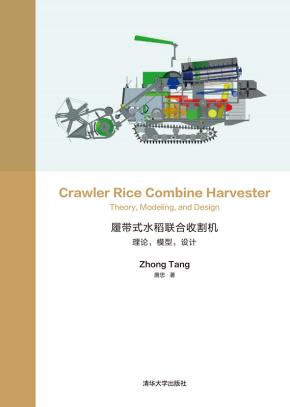
CrawlerRiceCombineHarvester:Theory,Model"
这是一本关于履带式水稻联合收割机收获理论、结构模型、设计方法的著作,本著作的内容是作者及其团队近十年来的**研究成果。本著作共分为九章,第1章主要阐述了收获期水稻的成熟度和力学特性,读者可以通过本章了解到成熟期水稻茎秆、稻叶、籽粒的基本属性。第2章至第5章主要阐述了履带式水稻联合收割机收获中的切割、输送、脱粒、分离、清选、籽粒输送等内容;在该部分读者可以详细了解到履带式水稻联合收割机的收获理论、结构模型、设计方法等。第6章至第8章主要阐述了履带式水稻联合收割机的人机交互平台设计,当履带式水稻联合收割机在进行收获时,整机的动态载荷和振动状态得到了详细的阐述。第9章主要阐述了水稻收获后田间废弃稻草的收获方法及其装备;本著作容纳了大量履带式水稻联合收割机**研究成果,该内容对于带式水稻联合收割机的设计具有重要的意义。
PREFACE
Rice is the main staple food for half of the population all over the world. As a modern rice harvesting machine,combine harvester can complete the processes of harvesting,threshing and cleaning at one time. In China,crawler rice combine harvester is a mainstream harvester,because in southern China,there are many small and mediumsized fields. During the rice harvest season,the soil in a small area is also relatively wet and soft. There were many factors that influence soil compaction apart from soil properties,mechanical pressure,soil layer,the time of compaction and so on. Crawler rice combine harvester can effectively reduce mechanical compaction on the wet soil. However,there are few books about theory,modeling,and design of crawler rice combine harvester. This is also detrimental to the promotion and the development of crawler rice combine harvester in China.
This book is about the
theory,modeling,and design of crawler rice combine harvester. The theory,modeling,and design of this book are the results of the author and his teams research on crawler rice combine harvester for more than 10 years. There are nine chapters in this book. The first chapter is introduction to rice harvesting. In this chapter,rice maturity and properties are introduced. Readers can learn about the attributes of rice stalks,rice leaves and grains as well as the characteristics of the threshing process. From chapter 2 to 5,rice stems cutting and conveying,rice threshing and separation,grain cleaning device and conveying process are introduced. In these chapters,readers can learn about the
theory,modeling,and design of crawler rice combine harvester. For chapter 6,chapter 7,and chapter 8,humanmachine interface chassis platform is designed. When the cutting,conveying,threshing,separating equipment were integrated on chassis platform,the dynamic load and vibration during rice harvesting were analyzed. The last chapter,the rice straw harvesting method and equipment are introduced. There is a wealth of knowledge contents and new knowledge of crawler rice combine harvester in this book. These research results are of important theoretical value to the design and research of crawler rice combine harvester.
Given its engineering content based on the authors practice,this book is also recommended for other courses in Agricultural Engineering that emphasize functional analysis,design,and research in field machinery. This book is also designed to be both introductory and comprehensive for a twocourse sequence for undergraduate and graduate students,respectively. In regard to the theory,analytical techniques,engineering design expertise,and software use,this book also serves as a useful reference tool for scientists and practicing engineering professionals in academia and industry around the world.
Zhong Tang2021Jan.21


CONTENTS
Chapter 1Introduction to Rice Harvesting
11Introduction for Rice Harvesting
111Developing of rice harvesting
112Chinese combine harvester of rice
12Field Growth Status of Rice at Maturity
13Rice Grain Properties and Modeling
131Morphological structure of rice grain
132Mechanical properties of rice grains
14Rice Stem Properties and Modeling
141Morphological structure of rice stem
142Mechanical properties of rice stems
143Breaking force distribution and breaking mode
15Rice Leaves Properties and Modeling
151Rice leaves and tensile test property
152Threepoint stretching of blades
153Tensile performance at different temperatures
154Moisture content law at different temperatures
155Tensile properties of multiple blades
16Control Method for Rice Plant Break Property
161Rice stem breaking force
162Rice leaves breaking force
163Changing of rice microstructure
Chapter 2Rice Stem Cutting and Conveying Equipment
21Introduction to Cutting and Conveying
211Structure of front header
212Structure of pentagon reel
213Structure of cutting bar
214Structure of combine auger
215Structure of assembly of front header
22Static Analysis of Front Header
221ANSYS simulation of front header
222Experiment mode of front header
23Stems Cutting Situation and Property in Field
231Rice stems cutting property
232Stems cutting situation in the field
24Dynamic Property during Cutting Process
241Vibration test method of front header
242Frame vibration of front header
243Cutting table rack vibration on land
Chapter 3Rice Threshing and Separation Method
31Threshing and Separate Model of Rice Grain
311Grain threshing and separation model
312Threshing and separation test of model
32Rice Stalk Movement during Rice Threshing
321Numerical model of threshing unit
322Straw movement speed and trajectory
323Eccentric load in threshing process
33Design and Optimization of Threshing Cylinder
331Negative pressure spiral feeding device
332Design of threshing cylinder cover
333Length optimization of threshing cylinder
334Design of transverse and longitudinal combined
335Design of transverse threshing multicylinders
34Threshing Results with Different Mature States
341Different mature states of rice
342Threshing and separation performance
35Parameters Prediction and Control of Rice Threshing
351Threshing torque and force of drum
352Methods of optimal parameter prediction
353Threshing cylinder parameter control
Chapter 4Damage of Rice in Threshing Process
41Threshing Force of Cylinder Threshing Bar
411Threshing force test method of threshing bar
412Threshing force of cylinder acting on stem
42Damage Property of Rice with Threshing Force
421Possibility of rice stalk damage
422Breaking property with combined force on stem
423Breaking property of rice leaves undergoing
43Microstructure of Rice Stalk after Threshing
44Grain Damage in Threshing Process
441Grain damage model undergoing threshing
442Mechanical characteristic parameters of rice grains
443Damage model of rice internal damage
444Internal damage of grain by threshing bars
Chapter 5Cleaning Device and Conveying Process
51Mixture Property of Rice after Threshing
511Floating speed test method of cleaning materials
512Floating speed of cleaning materials
52Influence of Air Flow in Cleaning Device
521Airandscreen cleaning device
522Air velocity test in the cleaning room
523Floating distribution state of mixture
53Theories of Rice Grain Cleaning Process
531Vibration screening motion theory
532Grains group separating theory
533Cleaning capability of queuing model
54Airandscreen Cleaning under Multiparameter
541CFD simulation of airflow field
542Fluidsolid coupling in cleaning room
543Distribution and loss rate of cleaned grain
Chapter 6HumanMachine Interface Chassis Platform
61HumanMachine Driving Operation Platform
611Rice combine harvester cab
612Cab maneuvering space layout
62Crawler Chassis Structure of Combine Harvester
621Overall structure of crawler chassis
622Main variable of crawler chassis
63Development of Crawler Steering Gearbox in Field
631Unilateral brake steering gearbox
632Positive and negative steering gearbox
633Tracks and trajectory of steering gearbox
64Design of Chassis Frame and Threshing Frame
641Structural design of chassis frame
642Structural design of threshing frame
65Bearing Capacity Analysis for Crawler Chassis
651Chassis frame structure load and stress state
652Analysis of carrying capacity of chassis frame
653Test of carrying capacity of chassis frame
Chapter 7Dynamic Load during Rice harvesting
71Integrated Status of Combine Harvester
711Component of combine harvester
712Combine harvester integration
72Dynamic Load of Rice Harvesting
721Transmission of combine harvester
722Dynamic load test method in field
723Affordability load of rice harvesting
73Dynamic Load of Crawler Drive Shaft
731Structure and stress of drive shaft
732Dynamic load test method of drive shaft
733Dynamic load undergoing different condition
74Reliability and Fatigue of Chassis Gearbox
741Structure principles of tracked gearbox
742Gear strength of tracked gearbox
743Chassis gearbox fatigue test
Chapter 8Dynamic Response Undergoing Harvesting
81Component Vibration of Combine Harvester
811Frame vibration of front header
812Unbalanced vibration of threshing cylinder
813Vibration response of harvester chassis frame
82Vibration Modal of Whole Combine Harvester
821Frame vibration model under multisource excitation
822Vibration response with field excitation
823Unbalance vibration modeling of grading chain drive
83Mutual Interference and Coupling Response
831Coframe multicylinder test bench in rice threshing
832Modal response under multisource excitation
84Dynamic Simulation Model of Combine Harvester
841Multisource excitation forces of rice combine harvester
842Comparison of simulation results and test results
Chapter 9Rice Straw Harvester in Field
91Straw Treatment after Rice Harvesting
92Method for Straw Picking and Baling Harvester
921Conceptual model of picking and baling machine
922Design method of picking and baling harvester
923Structural model of picking and baling machine
93Vibration Property during Picking and Baling
931Inertial vibration of crank slider
932Crank linkage structure dynamics
933Natural frequency and modal of piston
934Vibration property during machine running
94Straw Picking and Baling after Harvesting in Field
941Bundling capacity of machine
942Baling performance in field
95Harvesting and Bundling Integrated Harvester
951Harvesting and bundling combine harvester
952Straw bundling of integrated combine harvester
References
本著作是关于我国水稻联合收割机的结构设计,主要是是针对我国水稻收获过程中的履带式结构进行的设计和收获理论研究。
唐忠,男,副研究员/硕导,主持国家青年基金1项、省部级项目3项、市厅级项目2项,作为主要参与人完成***课题3项,省级课题4项;以一作者发表学术论文60余篇,其中SCI检索18篇,Ei检索36篇。以一作申请发明专利23件,授权发明专利9件;作为主要完成人,获2017年机械工业联合会科学技术一等奖(第四)、获2017年教育部科学技术进步奖一等奖(第四),获2018年中国专利奖金奖(第二)。