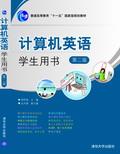
计算机英语·学生用书(第二版)"
直接阅读外文技术资料和文献是每个计算机技术人员和研究人员必须具备的一种能力。本书旨在使学生及专业人员能够熟悉并掌握计算机方面的基本专业英文词汇,熟悉科技英语的基本规律,并提高在计算机专业英文文献方面的阅读能力。
本书共20章,汇集了计算机技术各方面的内容,包括计算机硬件、软件、网络与通信、计算机应用等。本书的特点是内容和专业词汇的涵盖面广,选择的文章具有代表性和新颖性,尤其是阅读材料包括了最近10年中产生的一些新技术的介绍,从而使教师在选择教学内容方面有极大的灵活性。
本书适合于计算机科学与技术专业、软件工程专业、信息管理与信息系统专业、电子商务专业以及其他相关专业的本科生、研究生作为计算机专业英语课程的教材,对于从事计算机方面各种工作的专业技术人员提高计算机专业外文文献的阅读能力也有一定的帮助。
第二版
本教材第一版发行后,深受广大计算机专业英语老师和学生的欢迎,好评如潮。甚至参加全国计算机技术与软件专业技术资格(水平)考试的考生都将本教材视为应试必读教材之一。短短4年时间已经多次印刷,印刷量突破几万册。有的老师在来信中说:“我们在教学过程中多次使用清华大学出版社出版的《计算机英语》,效果很好。该书内容非常丰富,为教师的教学提供了极大的灵活性;该书提供配套的教师用书,为教师的备课提供了极大的方便。大多数此类教材中都包含课文的中文翻译,这样做既不利于提高学生学习计算机英语的效果,也不利于教师的备课,而且使课文的信息量大大降低,而本书在编排上将课文与翻译分离开来,彻底解决了上述问题,学生的学习效果和教学效果得到了极大的提高。”
另外,学生们反映,该教材中专业术语的解释部分很受欢迎,在某种程度上起到了专业词典的作用,用起来很方便,而且专业术语的解释很详细,既提高了计算机英语的阅读能力,又学到了很多新的知识,可谓一石二鸟。
在吸取各方面意见的基础上,本书第二版针对第一版的内容做了以下几个方面的调整。
(1) 将每一章的课文进一步精练,并适当调整内容,压缩了篇幅。调整比较大的内容包括:
● 删除。将第一版教材中的第8章(Files and File Processing)、第15章(Multimedia Technology)、第19章(Digital Image Processing)和第24章(CAD/CAM and CIMS)删除。
● 合并。将第一版教材中的第12章(Introduction to Computer Network)和第13章(OSI and TCP/IP Reference Model)合并为一章,第14章(Local Area Networks & Metropolitan Area Networks)和第15章(Wide Area Networks)合并为一章。
● 分解。将第一版教材中的第22章(Enterprise Resource Planning)分解为3章,分别是Enterprise Resource Planning,Supply Chain Management和Customer Relationship Management。
(2) 每一章课文前增加了“Pre-reading Questions”内容以方便学生预习。课文后增加了以下几部分内容:Grammatical Notes to the Text,Words Bank to the Text(包括3部分内容,其中新增了Useful new words和Useful phrases and expressions两部分内容)。
(3) 进一步丰富和规范了课后练习。
(4) 精练了课后的阅读材料,并进行了适当的调整和压缩。
(5) 为讲授此课的教师制作了配套的电子课件。
本教材与同类教材相比,有如下几个方面的区别。
● 编写教材的教师队伍是由以下三个方面的人员构成的:计算机相关专业的教师、从事多年计算机专业英语教学的一线教师、从事多年普通英语教学的一线教师。
● 从教材的结构和内容编排来看,有其独到之处:既有专业词汇的正规解释,又包括了一些常见的语法现象的解释。从事本课程教学的教师无论是从事计算机专业的还是英语专业的,本书都为他们提供了极大的方便。
● 国内的大多数教材在内容选取上都有所侧重:有的计算机英语教材偏重于硬件,有的偏重于软件,还有的教材是信息电子类的计算机英语,侧重于通信电子方面。另外,有的教材侧重于理论,例如数据结构、离散数学;而有的则侧重于应用,例如软件工程、数据库开发。本教材的编写改变了这种状况,在理论和应用上,在硬件、软件、网络、应用等方面均有所体现。
本教材的特色包括如下几个方面。
● 内容丰富,灵活性强。本书的内容非常丰富,涵盖了计算机科学技术专业及其相关专业的一些主要课程内容,包括计算机硬件、软件、网络与通信、计算机应用等,为不同专业教师的教学提供了可选性和极大的灵活性。
● 实用性和专业性相结合。本书的选材在保持原汁原味的同时使学习者更能接触到计算机英语的真实语境和主流思想,虽然有一定的难度,但非常实用和专业。另外,选材与我国大学本科专业教学计划中的专业课程有很好的对应关系。
● 重视教师的教学效果和学生的学习效果。大多数此类教材中都包含课文的中文翻译,这样做既不利于提高学生的学习效果,也不利于教师的备课,而且使课文的信息量大大降低。而本书在编排上将课文与翻译分离开来,彻底解决了上述问题,学生的学习效果和教师的教学效果得到了极大的提高。
● 附赠教师用书:凡选用本书作为教材的教师,均可免费获赠《计算机英语???教师用书(第二版)》。具体方法请参见书后的“《教师用书》需求信息反馈卡”。
本书从内容上可分为5篇。第1篇—— 计算机硬件基础,包括第1章—— 计算机系统概述,第2章—— 计算机系统的组成,第3章—— 计算机体系结构。第2篇—— 计算机软件基础,包括第4章—— 算法与数据结构,第5章—— 程序设计与语言,第6章—— 操作系统。第3篇—— 计算机软件,包括第7章—— 应用软件,第8章—— 数据库系统概论,第9章—— 软件工程,第10章—— 面向对象技术。第4篇—— 计算机网络与通信,包括第11章—— 计算机网络概述,第12章—— 局域网、城域网和广域网,第13 章—— Internet,第14章—— 信息安全。第5篇—— 计算机应用技术,包括第15章—— 信息系统,第16章—— 人工智能与专家系统,第17章—— 企业资源规划,第18章—— 供应链管理,第19章—— 客户关系管理,第20章—— 电子商务。
本书主要读者对象是计算机科学技术专业、软件工程专业、信息管理与信息系统专业、电子商务专业及其他相关专业的本科生、研究生和从事计算机相关工作的专业人员。
本书由姜同强主编,苗天顺任副主编。姜同强、苗天顺负责全书的统稿。参加编写的人员包括(按章节顺序排列):王雯编写第1章~第6章,姜同强编写第7章~第10章及各章专业术语的解释,孔凡航、周亦鹏编写第11章~第15章,赵守香编写第16章~第20章。另外,姜同强负责各章中Technical Notes to the Text和Technical terms and proper names的编写;苗天顺负责编写各章语法注释和部分课后练习,盖爽编写了部分阅读材料。
在本书的编写和出版过程中,清华大学出版社的同志为使本书尽快出版付出了辛勤劳动,在此表示感谢。另外,还要感谢我们编写团队中的每一位成员,这些成员具有不同的专业背景,没有他们高效率的通力合作,就不可能在短时间内完成这样一本工作量巨大的教材编写。
由于作者水平有限,加之时间仓促,本书中出现的错误在所难免,欢迎广大读者批评指正。
作者的联系方式:jtongqiang@yahoo.com.cn
服务邮箱:wkservice@vip.163.com
编 者
2008年9月于北京
? IV ?
计算机英语???学生用书(第二版)
? V ?
第二版


目 录
Chapter 1 Computer System
Overview 1
1.1 Digital Computer 1
1.2 Data Types 2
1.3 The Evolution of Computer 3
1.4 Types of Computers 4
Grammatical Notes to the Text 5
Technical Notes to the Text 7
Words Bank to the Text 9
Exercises 12
Reading Materials 15
Chapter 2 Computer System
Organization 18
2.1 Computer Organization
Introduction 18
2.2 System Buses 19
2.2.1 Address Bus 19
2.2.2 Data Bus 19
2.2.3 Control Bus 19
2.3 CPU Organization 20
2.3.1 Register Set 20
2.3.2 Arithmetic Logic Unit 20
2.3.3 Control Unit 20
2.4 Memory Subsystem
Organization 21
2.4.1 Types of Memory 21
2.4.2 Memory Hierarchy 23
2.5 I/O Subsystem
Organization 24
2.5.1 I/O Devices 25
2.5.2 I/O Interface 26
2.5.3 Modes of Transfer 27
Grammatical Notes to the Text 29
Technical Notes to the Text 32
Words Bank to the Text 33
Exercises 37
Reading Materials 40
Chapter 3 Computer System
Architecture 43
3.1 Parallel Processing 43
3.2 Pipelining 44
3.3 Vector Processing 46
3.4 RISC 48
Grammatical Notes to the Text 49
Technical Notes to the Text 51
Words Bank to the Text 52
Exercises 54
Reading Materials 57
Chapter 4 Algorithms and Data
Structure 59
4.1 Algorithms 59
4.2 Data Structure 64
Grammatical Notes to the Text 71
Technical Notes to the Text 74
Words Bank to the Text 75
Exercises 78
Reading Materials 81
Chapter 5 Programming and
Languages 83
5.1 The Procedure of
Programming 83
5.2 The Evolution of
Programming Languages 84
5.3 Compiling and Assembling
Programs 86
5.4 Object-Oriented
Programming (OOP) 87
5.5 Visual Programming 93
5.6 Internet Programming 93
Grammatical Notes to the Text 95
Technical Notes to the Text 98
Words Bank to the Text 100
Exercises 103
Reading Materials 105
Chapter 6 Operating System 108
6.1 Operating System
Overview 109
6.2 Operating System
Platform 114
Grammatical Notes to the Text 117
Technical Notes to the Text 119
Words Bank to the Text 121
Exercises 123
Reading Materials 127
Chapter 7 Applications Software 129
7.1 Applications Software
Tools 129
7.2 Common Features of
Applications Software 130
7.3 Productivity Software Tools 132
7.3.1 Word Processing
Software 132
7.3.2 Spreadsheet Software 133
7.3.3 Presentation Graphics 134
7.3.4 Groupware 135
7.3.5 Desktop Accessories 136
7.3.6 Web Browsers 137
Grammatical Notes to the Text 137
Technical Notes to the Text 139
Words Bank to the Text 139
Exercises 142
Reading Materials 145
Chapter 8 An Introduction to
Database Systems 149
8.1 Purpose of Database
Systems 149
8.2 View of Data 151
8.2.1 Levels of Data
Abstraction 151
8.2.2 Instances and Schemas 153
8.2.3 Data Independence 153
8.3 Data Models 154
8.3.1 Object-based logical
Models 154
8.3.2 Record-based Logical
Models 156
8.3.3 Physical Data Models 158
8.4 Database Languages 158
8.4.1 Data Definition Language
(DDL) 158
8.4.2 Data Manipulation
Language (DML) 158
8.4.3 SQL 159
8.5 Transaction Management 160
8.6 Database Administrator 161
Grammatical Notes to the Text 162
Technical Notes to the Text 163
Words Bank to the Text 165
Exercises 168
Reading Materials 171
Chapter 9 Software Engineering 173
9.1 What Is Software
Engineering 173
9.2 Key Issues of Software
Engineering 174
9.3 Software Process 178
9.4 Computer-Aided Software
Engineering (CASE) 182
Grammatical Notes to the Text 184
Technical Notes to the Text 187
Words Bank to the Text 188
Exercises 191
Reading Materials 194
Chapter 10 Object-Oriented
Technology 197
10.1 A Brief Overview of
Object Technology 197
10.2 What Is OO—— System
Concepts for Object
Modeling 198
10.3 The OO Development
Process 203
10.4 Unified Modeling Language
(UML) 208
Grammatical Notes to the Text 210
Technical Notes to the Text 212
Words Bank to the Text 214
Exercises 216
Reading Materials 219
Chapter 11 Introduction to Computer
Networks 222
11.1 Data Communications 222
11.1.1 Signals 222
11.1.2 Encoding 223
11.1.3 Transmission Mode 224
11.2 Introduction to Computer
Networks 225
11.3 Applications of Computer
Networks 225
11.4 Categories of Networks 226
11.4.1 Configurations 227
11.4.2 Strategies 228
11.4.3 LANs, MANs and
WANs 230
11.4.4 Intranets and
Extranets 231
11.5 OSI and TCP/IP
Reference Model 232
11.5.1 OSI Reference
Model 232
11.5.2 TCP/IP Reference
Model 234
Grammatical Notes to the Text 234
Technical Notes to the Text 236
Words Bank to the Text 238
Exercises 241
Reading Materials 244
Chapter 12 LAN, MAN&WAN 246
12.1 Local Area Networks 246
12.1.1 Ethernet (802.3) 246
12.1.2 Token Bus (802.4) 248
12.1.3 Token Ring (802.5) 249
12.1.4 FDDI 250
12.1.5 Comparison 252
12.2 Metropolitan Area Networks
(IEEE802.6) 252
12.3 Wide Area Networks 252
12.3.1 Introduction 252
12.3.2 Narrowband ISDN 253
12.3.3 X.25 Networks 254
12.3.4 Frame Relay 255
12.3.5 Broadband ISDN and
ATM 255
Grammatical Notes to the Text 256
Technical Notes to the Text 258
Words Bank to the Text 259
Exercises 261
Reading Materials 264
Chapter 13 Internet 267
13.1 Introduction 267
13.2 Technology of Internet 268
13.2.1 Internet Address 268
13.2.2 DNS ( Domain Name
System) 269
13.2.3 HTTP and SMTP 271
13.3 Services Provided by the
Internet 272
13.3.1 WWW (World Wide
Web) 272
13.3.2 E-mail 273
13.3.3 FTP (File Transfer
Protocol) 274
13.3.4 Telnet 274
13.4 Networking Devices 274
13.4.1 Hub and Repeater 274
13.4.2 Bridge and Switch 275
13.4.3 Router 276
13.5 Access to Internet 276
13.5.1 Dial-up 276
13.5.2 DSL 277
Grammatical Notes to the Text 277
Technical Notes to the Text 279
Words Bank to the Text 280
Exercises 282
Reading Materials 285
Chapter 14 Information Security 287
14.1 A Brief Overview of
Information Security
Concepts 287
14.2 Information Security
Technology 290
14.2.1 Information Authenti-
cation Technology 290
14.2.2 Encryption
Technology 291
14.2.3 Database Security 294
14.3 Computer Virus 295
14.3.1 Virus Behavior 296
14.3.2 Types of Viruses 296
14.3.3 Virus Prevention and
Detection 297
14.4 Firewall 298
14.4.1 Firewall Concept 298
14.4.2 Types of Firewall 298
14.4.3 Firewall
Implementation 299
14.5 Standards of Information
Security 301
14.6 E-Commerce Security 302
14.6.1 Significance of
Corporate Information
Security 302
14.6.2 Current Processes and
Tools for Implementing
E-Business Security 302
Grammatical Notes to the Text 303
Technical Notes to the Text 305
Words Bank to the Text 306
Exercises 310
Reading Materials 313
Chapter 15 Information System 316
15.1 Major Types of Information
System in Organization 316
15.2 Transaction Processing
System (TPS) 317
15.3 Management Information
System (MIS) 319
15.3.1 A Definition of MIS 319
15.3.2 A MIS Model 319
15.3.3 Organizational
Information System 320
15.4 Decision Support System
(DSS) 321
15.4.1 The DSS Concept 321
15.4.2 DSS Objectives 322
15.4.3 A DSS Model 323
Grammatical Notes to the Text 324
Technical Notes to the Text 325
Words Bank to the Text 327
Exercises 329
Reading Materials 332
Chapter 16 Artificial Intelligence and
Expert System 335
16.1 Artificial Intelligence
(AI) 335
16.2 Expert System 336
Grammatical Notes to the Text 341
Technical Notes to the Text 342
Words Bank to the Text 342
Exercises 344
Reading Materials 347
Chapter 17 Enterprise Resource
Planning 352
17.1 Enterprise System 352
17.2 Enterprise Resource
Planning System 353
17.3 The Evolution of Enterprise
Resource Planning 356
Grammatical Notes to the Text 359
Technical Notes to the Text 361
Words Bank to the Text 362
Exercises 363
Reading Materials 367
Chapter 18 Supply Chain
Management 369
18.1 What Is a Supply Chain 369
18.2 The Objectives of a Supply
Chain 371
18.3 Decision Phases in a
Supply Chain 371
18.4 The Importance of Supply
Chain Flows 373
Grammatical Notes to the Text 375
Technical Notes to the Text 376
Words Bank to the Text 377
Exercises 378
Reading Materials 381
Chapter 19 Customer Relationship
Management 383
19.1 Customer Relationship
Management Concepts 383
19.2 Four Types of Customers 384
19.2.1 Win Back or Save 384
19.2.2 Prospecting 384
19.2.3 Loyalty 385
19.2.4 Cross-Sell/Up-Sell 386
19.3 Customer Relationship
Management (CRM)
Software 386
19.3.1 Sales Force
Automation (SFA) 386
19.3.2 Customer Service 387
19.3.3 Marketing 387
19.4 Operational and Analytical
CRM 388
Grammatical Notes to the Text 388
Technical Notes to the Text 390
Words Bank to the Text 391
Exercises 393
Reading Materials 396
Chapter 20 E-Business and
E-Commerce 403
20.1 E-Business 403
20.2 E-Commerce 407
Grammatical Notes to the Text 409
Technical Notes to the Text 409
Words Bank to the Text 411
Exercises 412
Reading Materials 415
? X ?
计算机英语???学生用书(第二版)
? XI ?
目 录